
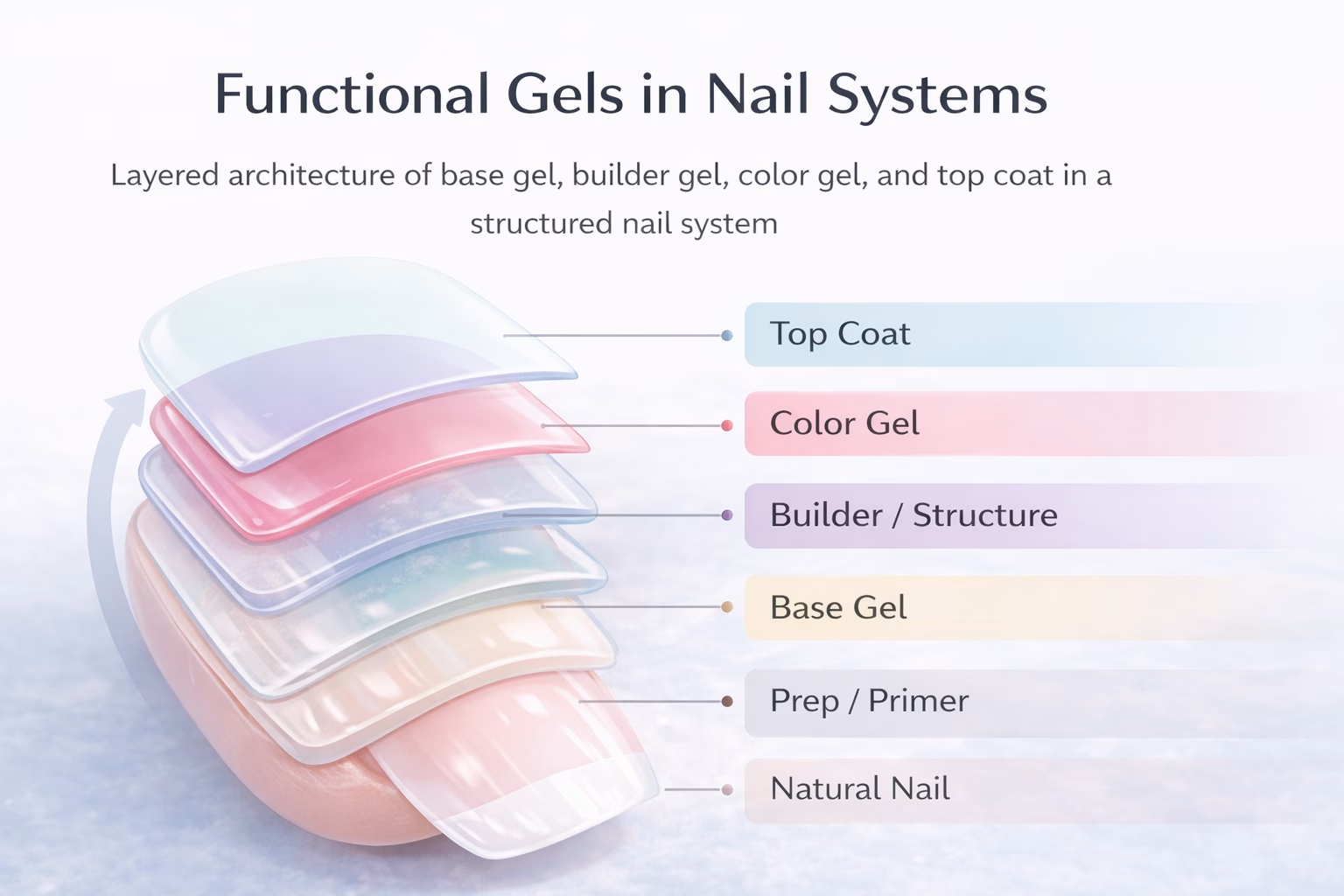
1. What Are Functional Gels in Nail Systems?
In professional nail systems, functional gels refer to a category of gel products designed not primarily for color, but for performance, structure, adhesion, protection, or special effects.
Unlike standard gel polish, which focuses on visual appearance, functional gels serve specific roles within the nail system.
They are essential for ensuring:
- proper adhesion
- structural strength
- long-lasting wear
- design versatility
In modern nail systems, a manicure is not created by a single product, but by a layered system of functional and aesthetic materials.
Functional gels form the backbone of this system.
Functional vs Color Gels
To understand functional gels clearly, it is useful to distinguish them from color gels.
Color gels:
- provide pigmentation
- define visual style
- follow trend-driven design
Functional gels:
- support the nail system
- improve performance
- enable specific application techniques
For example:
- a base gel ensures adhesion
- a builder gel creates structure
- a top coat seals and protects
- a blooming gel enables diffusion effects
This distinction is critical for both technicians and product developers.
Why Functional Gels Matter
Without functional gels, even the most beautiful color application would fail.
Common issues caused by missing or incorrect functional layers include:
- lifting
- peeling
- cracking
- uneven curing
- poor surface finish
For professional nail brands, understanding functional gels is key to building a complete product system rather than isolated products.
2. How Functional Gels Work
Functional gels operate through a combination of chemical bonding, mechanical structure, and optical interaction.
Each type of functional gel is formulated to achieve a specific function within the nail system.
Adhesion Mechanism
Base gels and primers improve adhesion by creating a bond between the natural nail and the gel system.
This involves:
- penetrating micro-porosity on the nail surface
- forming polymer networks during curing
- anchoring subsequent layers
Without proper adhesion, all upper layers will fail regardless of quality.
Structural Reinforcement
Builder gels and strengthening gels provide mechanical support.
They increase:
- nail thickness
- load-bearing capacity
- resistance to breakage
These gels are especially important for:
- weak natural nails
- nail extensions
- long nail designs
Surface Modification
Top coats and specialty functional gels modify the surface characteristics of the nail.
They can alter:
- gloss level
- texture
- scratch resistance
- chemical resistance
Examples:
- matte top coat → reduces reflection
- tempered top coat → increases hardness
Optical Effects
Some functional gels influence how light interacts with the nail surface.
These include:
- blooming gel → diffusion effects
- magnetic gel base layers → particle alignment
- reflective gels → light return enhancement
These gels are critical in modern nail art systems.
3. Core Roles in Nail Systems
Functional gels operate within a structured nail system.
Each layer has a defined role, and together they create a stable, high-performance manicure.
1. Foundation Layer
Products:
- nail prep
- primer
- base gel
Function:
- adhesion
- surface preparation
- oil control
This layer determines whether the entire system will last.
2. Structural Layer
Products:
- builder gel
- BIAB (builder in a bottle)
- rubber base
Function:
- strengthening
- shaping
- extension support
This layer controls the physical durability of the nail.
3. Color Layer
Products:
- gel polish
- cat eye gel
- jelly gel
Function:
- visual appearance
- design
Functional gels support this layer but do not replace it.
4. Effect Layer
Products:
- blooming gel
- chrome base gel
- magnetic base
Function:
- enable design techniques
- modify color behavior
This layer is increasingly important in modern nail trends.
5. Protection Layer
Products:
- top coat (gloss / matte / no wipe)
Function:
- sealing
- protection
- finish control
This is the final barrier between the nail and the external environment.
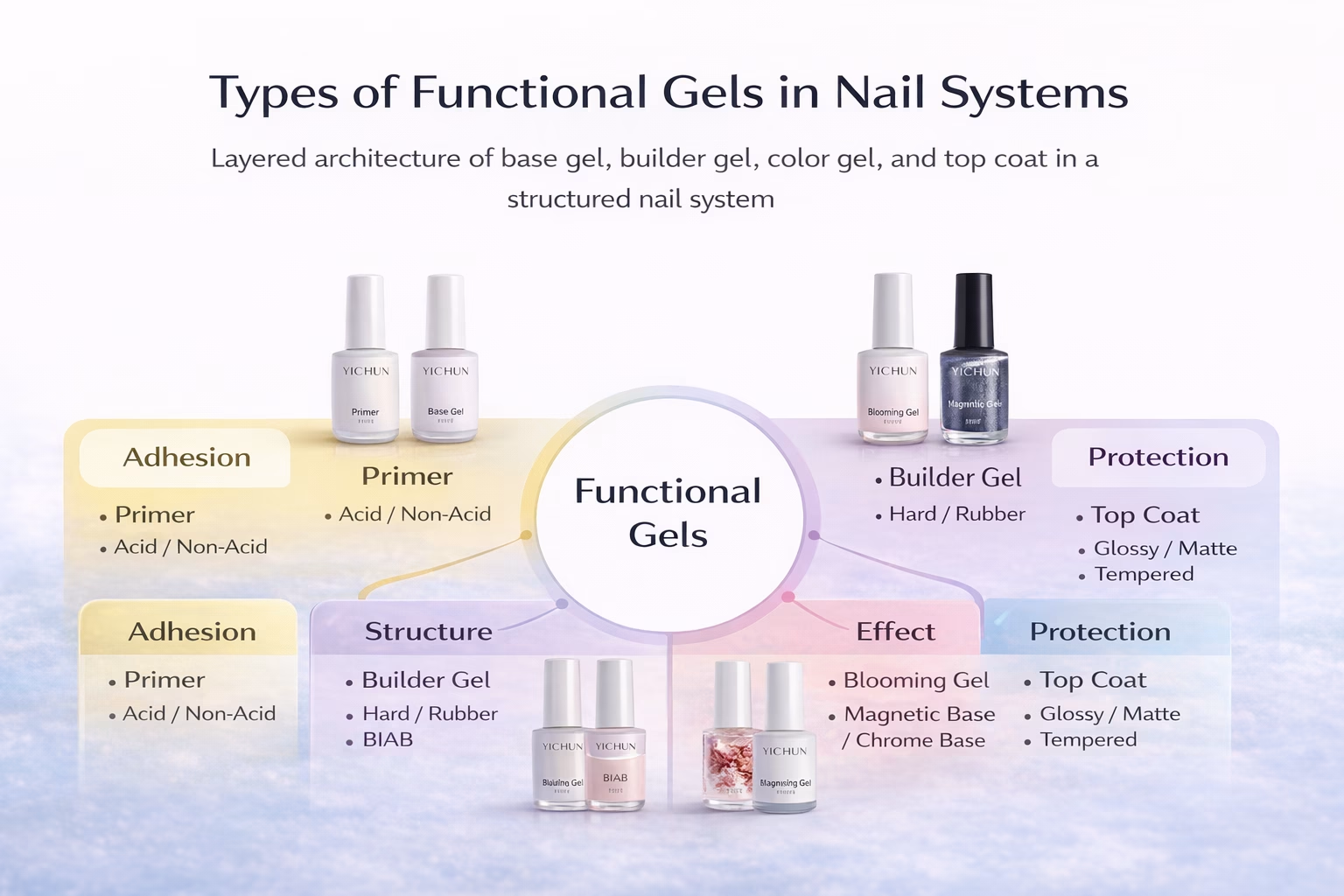
4. Major Types / Variations of Functional Gels
Functional gels can be categorized into several major types based on their role in the nail system.
Understanding these categories is essential for both product development and professional application.
1. Adhesion Systems
Primer
- acid / non-acid
- improves bonding
- used before base gel
Base Gel
- standard base
- rubber base
- strengthening base
These products ensure that the gel system adheres properly to the natural nail.
2. Structure & Strength Systems
Builder Gel
- thick viscosity
- used for extension and shaping
- high strength
BIAB (Builder in a Bottle)
- medium viscosity
- combines base + builder
- easier application
Rubber Base
- flexible structure
- ideal for weak nails
These gels define the structural integrity of the nail.
3. Surface & Protection Systems
Top Coat
- glossy
- matte
- velvet / satin
Tempered Top Coat
- enhanced scratch resistance
- long-lasting shine
These products protect the nail and control final appearance.
4. Effect Functional Gels
Blooming Gel
- creates diffusion patterns
- used for marble and watercolor effects
Magnetic Gel Base
- interacts with magnetic pigments
- controls particle movement
Chrome Base Gel
- enhances powder adhesion
- improves mirror effect
These gels are key to advanced nail design techniques.
5. Specialty Functional Gels
No-Wipe Top
- eliminates cleansing step
Peel-Off Base
- temporary wear
- easy removal
Anti-Yellow Top Coat
- maintains color clarity
These products improve user experience and solve specific problems.
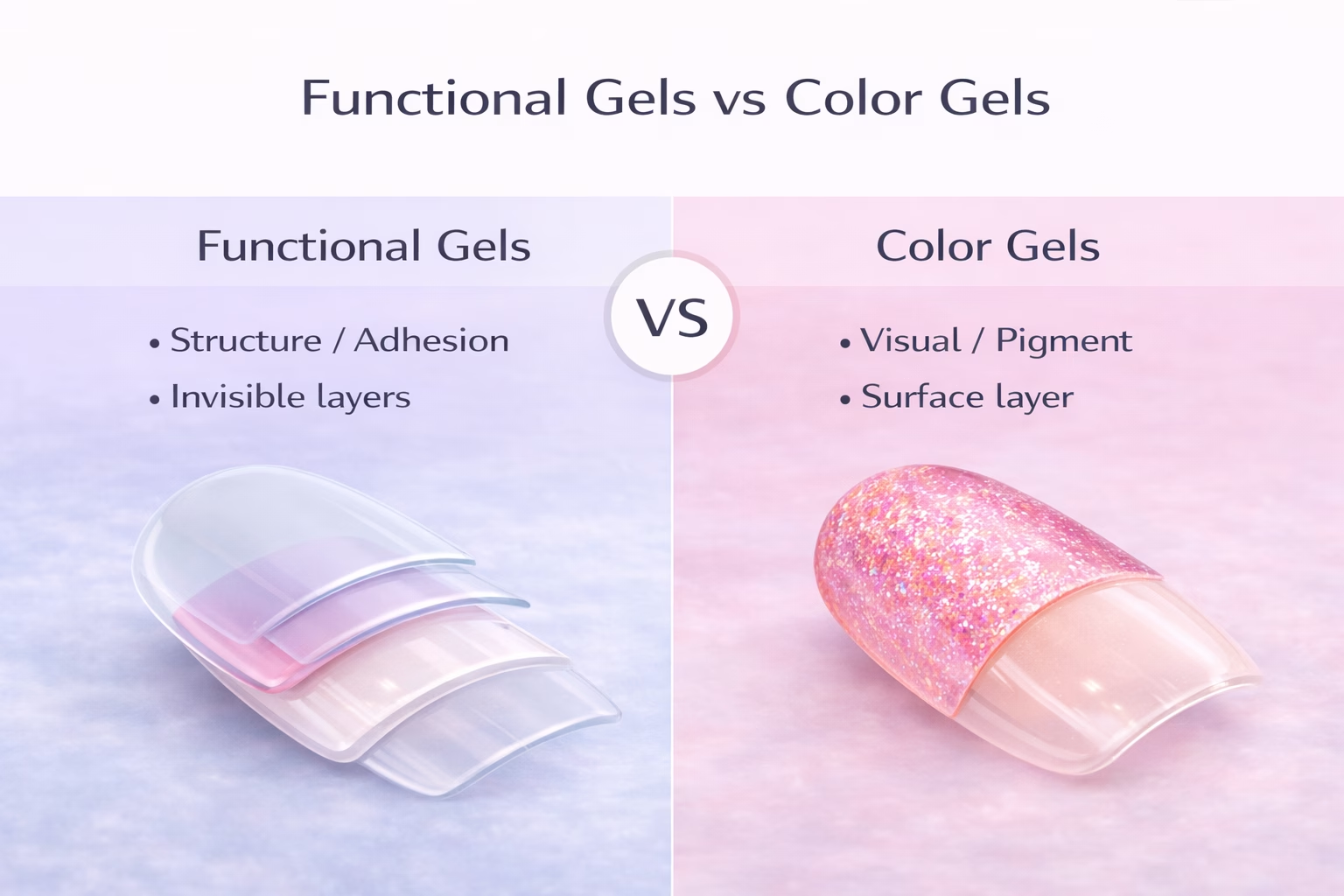
5. Functional Gels vs Other Nail Gels
Understanding the difference between functional gels and other gel types is critical, especially for buyers and brand developers building a complete nail system.
Many mistakes in product selection come from confusing roles vs appearance.
Functional Gels vs Color Gels
The most common confusion is between functional gels and color gels.
Color gels focus on visual output:
- pigmentation
- opacity
- finish (glossy, shimmer, cat eye)
Functional gels focus on system performance:
- adhesion
- structure
- durability
- application behavior
For example:
- A cat eye gel creates a visual effect
- A magnetic base gel controls how that effect forms
They work together, but they are not interchangeable.
Functional Gels vs Builder Gels
Builder gels are sometimes misunderstood as “just another gel type,” but they are actually a subcategory of functional gels.
Builder gels:
- provide structure
- allow extensions
- control nail shape
However, they do not:
- replace base gels
- replace top coats
- replace effect gels
This misunderstanding often leads to incomplete systems.
Functional Gels vs Nail Liquids (Prep Products)
Products like nail prep, dehydrators, and primers are not gels, but they are part of the functional system layer.
They operate differently:
- liquid form
- evaporative behavior
- no curing required
But their role is still functional:
- improving adhesion
- preparing the nail surface
Functional Gels vs Hybrid Systems
Modern nail systems often combine multiple functions into one product.
Examples:
- rubber base (adhesion + flexibility)
- BIAB (base + builder)
- 5-in-1 gels
While convenient, these hybrid systems may:
- reduce application steps
- simplify workflows
But also:
- reduce control precision
- limit customization
For professional use, full systems are still preferred.
6. Application Logic & Variables
Functional gels are not just about “what product to use,” but how they are used within a system.
The same product can produce different results depending on:
- layer thickness
- curing conditions
- nail condition
- sequence of application
Layer Order Matters
A correct nail system follows a strict sequence:
- Nail prep
- Primer
- Base gel
- Builder / structure gel
- Color gel
- Effect gel (optional)
- Top coat
Skipping or rearranging layers can result in:
- lifting
- cracking
- poor finish
Thickness Control
Different functional gels require different thickness levels.
- Base gel → thin layer
- Builder gel → medium to thick
- Top coat → thin, even seal
Too thick:
- incomplete curing
- bubbling
- uneven surface
Too thin:
- insufficient strength
- weak adhesion
Curing Variables
Curing performance depends on:
- lamp power
- wavelength
- time
- pigment interference
Functional gels are especially sensitive to curing because they define the system foundation.
Nail Condition Variables
The natural nail condition affects how functional gels perform.
Examples:
- oily nails → require stronger prep
- thin nails → require flexible base
- damaged nails → require reinforcement
This is why professionals adjust product selection per client.
Product Compatibility
Not all functional gels are fully compatible across brands.
Differences may include:
- viscosity
- curing chemistry
- shrinkage rate
For B2B buyers, this is critical:
A product should not be evaluated individually, but as part of a system compatibility framework.
7. Suitable & Unsuitable Scenarios
Functional gels are not universally interchangeable.
Choosing the wrong type can reduce performance even if the product quality is high.
Suitable Scenarios
Weak or Thin Nails
Recommended:
- rubber base
- builder gel
Reason:
- adds flexibility and strength
Nail Extensions
Recommended:
- builder gel
- hard gel
Reason:
- provides structural support
High-Frequency Wear (Salon Clients)
Recommended:
- full system (prep + base + builder + top)
Reason:
- ensures durability and consistency
Advanced Nail Art
Recommended:
- blooming gel
- magnetic base
- chrome base
Reason:
- enables effect control
Unsuitable Scenarios
Using Only Color Gel Without Base
Result:
- immediate lifting
- poor adhesion
Using Builder Gel Without Proper Prep
Result:
- detachment from nail plate
Overusing Thick Layers
Result:
- curing issues
- overheating
- structural imbalance
Using Peel-Off Base for Long-Term Wear
Result:
- short retention
- easy lifting
8. Common Misunderstandings
Even experienced users and buyers often misunderstand functional gels.
Correcting these misconceptions is key to improving both product performance and customer satisfaction.
Misunderstanding 1: “All gels are similar”
Reality:
Functional gels have highly specialized roles.
Using the wrong type affects the entire system.
Misunderstanding 2: “Builder gel can replace everything”
Reality:
Builder gel provides structure, but cannot replace:
- adhesion layers
- top coat protection
- effect control layers
Misunderstanding 3: “Thicker means stronger”
Reality:
Excess thickness can:
- reduce curing efficiency
- increase breakage risk
Strength comes from correct structure, not thickness.
Misunderstanding 4: “One product can do everything”
Reality:
Multi-functional gels are useful, but:
- they simplify, not optimize
- they cannot replace a full professional system
Misunderstanding 5: “Functional gels don’t affect design”
Reality:
Functional gels directly influence:
- color appearance
- light reflection
- effect behavior
For example:
- base color affects jelly gel tone
- magnetic base affects cat eye clarity
9. Functional Gels in Integrated Nail Systems
In professional nail systems, functional gels are not isolated products — they operate as a coordinated system architecture.
Understanding their position within this architecture is what separates:
- beginners from professionals
- sellers from system builders
- products from solutions
System Thinking vs Product Thinking
Most low-level product strategies focus on individual items:
- a base gel
- a builder gel
- a top coat
However, professional nail systems are designed as interconnected layers.
Each functional gel must:
- complement the previous layer
- support the next layer
- maintain overall system balance
Layer Interaction Model
A complete system can be understood as a layered structure:
Natural Nail
↓
Prep / Primer Layer
↓
Base Layer (Adhesion)
↓
Structure Layer (Builder / BIAB)
↓
Color Layer
↓
Effect Layer (Optional)
↓
Top Layer (Protection)
Each layer has:
- a defined role
- specific material properties
- interaction with adjacent layers
Dependency Between Functional Gels
Functional gels do not work independently.
Examples:
- A high-performance top coat cannot compensate for poor adhesion
- A strong builder gel cannot fix an unstable base
- A premium color gel cannot perform on a weak structure
This means:
👉 The system is only as strong as its weakest functional layer
System Optimization Strategy
For brands and OEM clients, optimizing a nail system involves:
1. Matching Material Properties
- flexibility vs hardness
- viscosity vs control
- curing speed vs stability
2. Ensuring Compatibility
Products must be tested together, not individually.
This includes:
- curing compatibility
- shrinkage behavior
- adhesion consistency
3. Designing for Use Scenarios
Different markets require different systems:
- salon system → durability & repeatability
- retail system → simplicity & ease of use
- training system → flexibility & error tolerance
Why This Matters for B2B Buyers
For distributors and brand owners, selling individual gels is no longer enough.
The market is shifting toward:
👉 System-based product solutions
Buyers increasingly look for:
- complete gel systems
- ready-to-use product combinations
- stable, repeatable performance
This is where functional gels become a strategic category.

10. Role in Professional Product Systems
From a product development perspective, functional gels define the structure of your product portfolio.
From Products to Systems
Instead of offering:
- random SKUs
Professional brands offer:
- structured product systems
Example:
- Adhesion Series
- Structure Series
- Effect Series
- Protection Series
Each category is built around functional gels.
SKU Strategy for Functional Gels
A well-designed system typically includes:
Core Products (Must-Have)
- nail prep
- primer
- base gel
- builder gel
- top coat
Performance Upgrade Products
- rubber base
- BIAB
- tempered top coat
Design Enabling Products
- blooming gel
- chrome base
- magnetic base
Specialty / Problem-Solving Products
- peel-off base
- anti-yellow top coat
- no-wipe systems
OEM & Brand Development Perspective
For OEM clients, functional gels are the foundation of brand differentiation.
Instead of competing only on color:
You can differentiate through:
- system performance
- application experience
- product integration
Commercial Positioning
Functional gels allow brands to:
- increase average order value
- build system bundles
- improve customer retention
For example:
Instead of selling only color gels:
You sell:
👉 Complete nail systems
Educational Value
Functional gels also provide strong educational content opportunities:
- product guides (like this one)
- tutorials
- system explanations
This helps:
- build trust
- reduce misuse
- increase repeat purchases
Conclusion
Functional gels are not secondary products — they are the foundation of modern nail systems.
They determine:
- adhesion
- structure
- durability
- design possibilities
Understanding their types and roles allows professionals to:
- build stable nail systems
- improve application results
- develop stronger product portfolios
For brands and OEM buyers, functional gels represent a shift from:
❌ product selling
➡️ to
✅ system building
And in today’s market, systems outperform products.
FAQ — Functional Gels in Nail Systems
What are functional gels in nail systems?
Functional gels are gel products designed to support the performance of a nail system rather than provide color. They include base gels, builder gels, top coats, and effect gels, each serving roles such as adhesion, structure, protection, and design control.
What is the difference between functional gels and color gels?
Color gels are used for visual appearance, while functional gels are used to ensure the system works properly. Functional gels control adhesion, strength, durability, and application behavior, whereas color gels provide pigment and style.
Do I need all types of functional gels for a professional nail system?
For a complete and long-lasting nail system, multiple functional layers are recommended. At minimum, a system should include nail prep, base gel, structure support (such as builder or rubber base), and a top coat. Additional functional gels can enhance design and performance.
Can builder gel replace base gel or top coat?
No. Builder gel provides structure but cannot replace base gel or top coat. Base gel is necessary for adhesion, and top coat is required for sealing and protection. Each functional gel has a specific role in the system.
What is the most important functional gel in a nail system?
There is no single “most important” gel, as all layers depend on each other. However, base gel is often considered critical because it determines adhesion. Without proper adhesion, the entire system will fail regardless of other products.
Are multifunctional gels better than traditional systems?
Multifunctional gels such as BIAB or 5-in-1 products can simplify the application process, but they may reduce control and customization. Professional nail systems typically achieve better performance using dedicated functional layers.
How do I choose the right functional gel system?
Choosing the right system depends on factors such as nail condition, application style, and target market. For example, flexible systems are better for weak nails, while stronger builder systems are required for extensions. Compatibility between products is also essential.
Why do gel nails lift or peel even when using good products?
Lifting is usually caused by incorrect use of functional gels rather than product quality. Common causes include poor nail preparation, incorrect base application, incompatible products, or improper curing.