
What Is Jelly Gel vs Sheer vs Milky vs Syrup Gel?
In today’s gel polish market, terms like jelly, sheer, milky, and syrup are frequently used — often interchangeably. However, from a professional product development and system-design perspective, these are not identical concepts.
They describe different relationships between:
- Pigment concentration
- Light transmission
- Color diffusion behavior
- Layering opacity
- Viscosity and flow dynamics
Understanding these differences is essential for:
- Professional nail brands
- Private label developers
- Salon system designers
- OEM formulation teams
Because although all four belong to the broader category of translucent gel systems, they behave differently in application and in commercial positioning.
Let’s define each clearly.
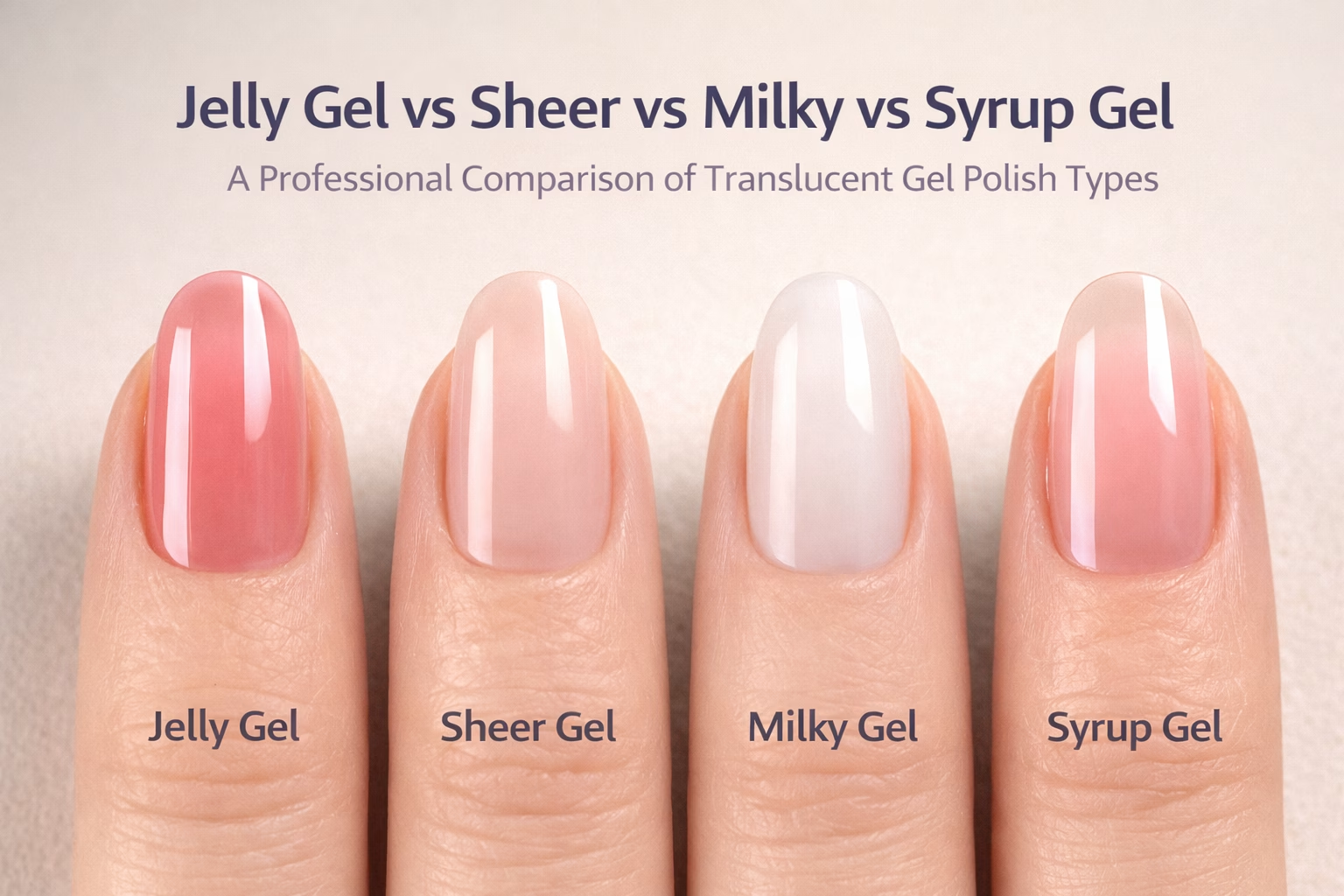
Jelly Gel
Jelly gel refers to a translucent gel polish with medium transparency and visible color saturation. It allows light to pass through while maintaining clear chromatic identity.
Characteristics:
- Moderate pigment load
- High light transmission
- Layer-build opacity
- “Glass candy” visual effect
- Popular in Korean nail trends
It is not fully clear — but it is not opaque either.
The defining trait of jelly gel is that color builds through layers rather than covering in one coat.
Sheer Gel
Sheer gel is defined by low opacity regardless of color family.
Unlike jelly gel, which implies vibrancy, sheer gel describes:
- Minimal pigment density
- High transparency
- Natural nail enhancement
- Subtle tone correction
Sheer gels are often used in:
- Bridal nails
- Nude collections
- Clean-girl aesthetics
- Natural manicure systems
Sheer is an opacity classification — not a style identity.
Milky Gel
Milky gel belongs to semi-translucent neutral systems.
It is characterized by:
- Diffused pigment dispersion
- Soft white or nude haze
- Slight opacity with light-filtering quality
Milky gels create a “clouded glass” appearance rather than a colored transparency.
They are commonly positioned for:
- French base enhancement
- Baby boomer gradients
- Nail bed correction
Milky is closer to a light-diffusion gel than a color-driven translucent gel.
Syrup Gel
Syrup gel is often confused with jelly gel but is technically distinct.
Syrup gels emphasize:
- Flow fluidity
- Self-leveling translucency
- Gloss intensity
- Gradient compatibility
They are typically:
- Lower viscosity
- High clarity
- Designed for layered syrup art
In market positioning, syrup gel is strongly associated with:
- Japanese nail art
- Layered gradient systems
- Glass-like shine
While jelly emphasizes color identity, syrup emphasizes liquid luminosity.
Classification Boundary Summary
| Type | Transparency | Pigment Feel | Visual Identity | Core Position |
|---|---|---|---|---|
| Jelly | Medium-high | Color-driven | Candy glass | Trend color |
| Sheer | High | Low pigment | Natural tint | Nude system |
| Milky | Medium | Diffused | Soft haze | Base enhancer |
| Syrup | High | Fluid clarity | Liquid gloss | Gradient art |
All four exist within translucent gel categories — but they serve different system roles.
How It Works: Transparency, Pigment Load & Light Transmission
The differences between jelly, sheer, milky, and syrup gels are fundamentally optical and structural.
Three core variables define them:
- Pigment concentration
- Pigment particle dispersion
- Resin viscosity behavior
Pigment Concentration
Opacity is directly influenced by pigment density.
High pigment load = faster coverage
Low pigment load = greater light transmission
Sheer and syrup systems operate at the lowest pigment levels.
Milky operates with diffused white pigments.
Jelly operates at moderate saturation levels.
Particle Dispersion
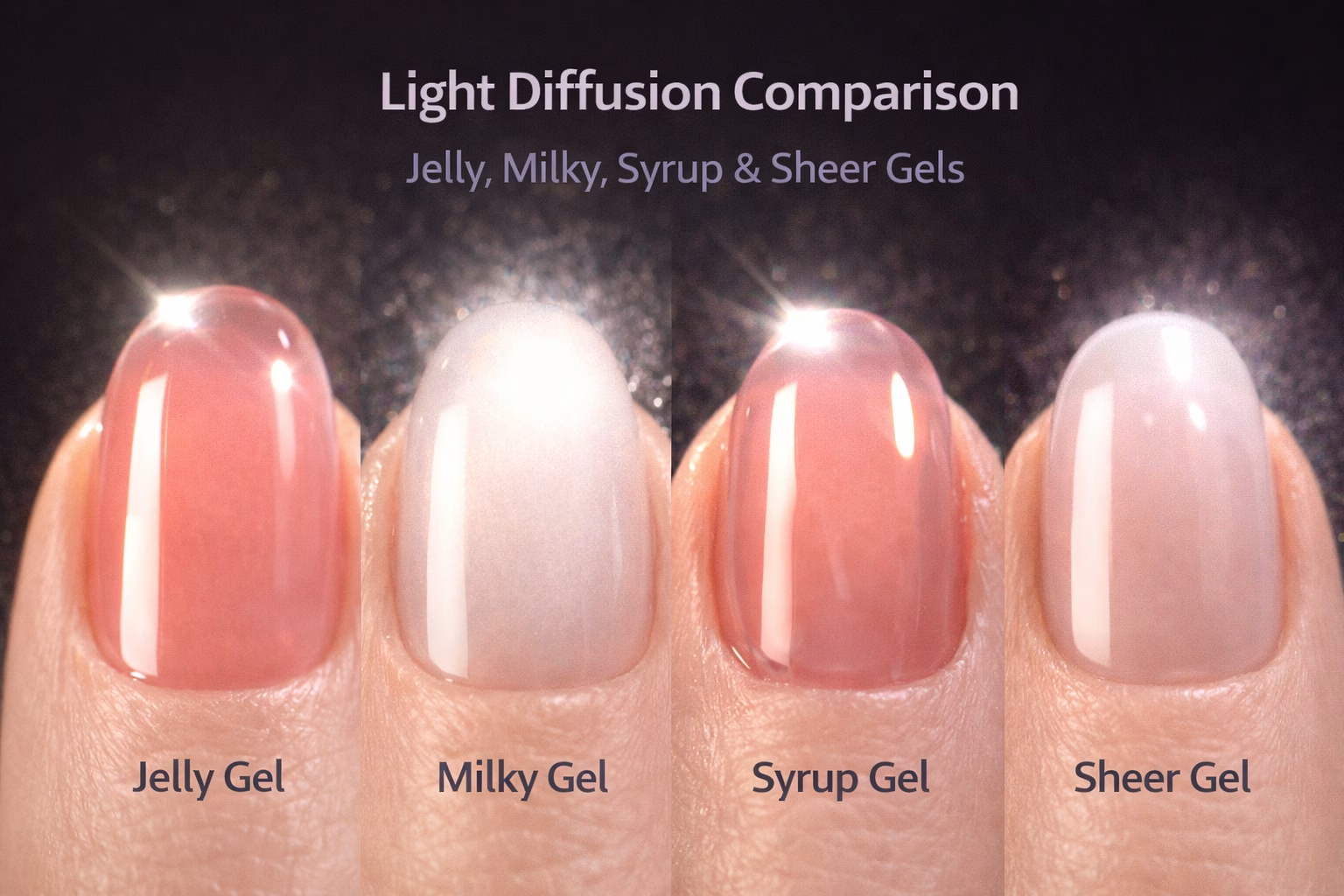
The visual effect depends not only on quantity, but dispersion quality.
- Uniform dispersion → clean transparency
- Micro-diffusion → milky haze
- Saturated dispersion → jelly richness
Milky gels use fine titanium dioxide derivatives in reduced concentration to create that soft haze.
Jelly gels use chromatic pigments but limit density to preserve translucency.
Resin & Viscosity Mechanics
Viscosity changes light behavior.
Higher viscosity:
- Thicker layer
- Slight opacity increase
- Slower leveling
Lower viscosity:
- Thin coat clarity
- Faster leveling
- Stronger light penetration
Syrup gels often have lower viscosity compared to jelly gels.
This is why syrup gels are favored for gradient stacking.
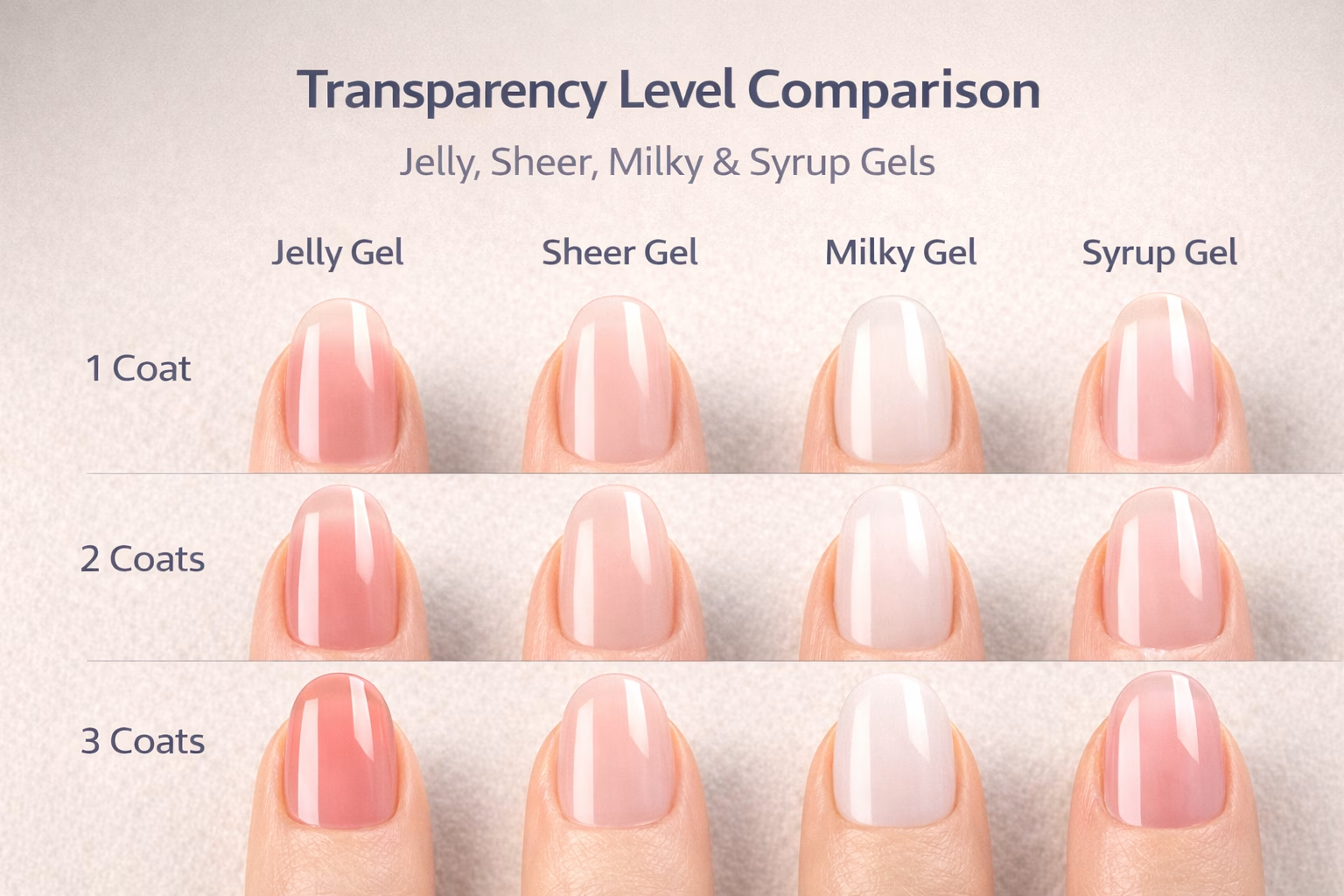
Layer-Build Effect
Translucent systems are layer-dependent.
One coat:
- Light tone
Two coats: - Color depth
Three coats: - Semi-opaque finish
Jelly and syrup systems are designed to be layer-responsive.
Sheer systems remain sheer even after multiple coats.
Milky systems increase diffusion but not color intensity.
Core Roles in Nail Systems
Now let’s examine their functional role inside a professional nail system.
Jelly Gel – Visual Accent Builder
Role:
- Color-forward translucency
- Trend-driven seasonal palettes
- Glass nail aesthetics
Jelly gel is used when color identity matters.
It bridges between opaque color gel and transparent effect gel.
Sheer Gel – Natural Enhancement Layer
Role:
- Tone correction
- Natural nail beautification
- Nude line foundation
Sheer gel is rarely the “hero product” — it is a system stabilizer.
Milky Gel – Structural Base Enhancer
Role:
- Nail bed softening
- Gradient blending
- French manicure base
Milky gel acts as a buffer between builder and color.
Syrup Gel – Gradient & Layer Art System
Role:
- Layer stacking
- Ombre art
- Glass reflection effect
Syrup gel is the most art-responsive variant.
Major Types / Variations
Within each category, variations exist.
Jelly Gel Variations
- Neon jelly
- Nude jelly
- Dark jelly
- Glitter jelly
Sheer Variations
- Pink sheer
- Beige sheer
- Peach sheer
- Clear tone correction
Milky Variations
- Milky white
- Milky pink
- Milky nude
- Milky builder base hybrid
Syrup Variations
- High-gloss syrup
- Micro-glitter syrup
- Low-viscosity syrup
- Japanese art syrup
GPS Coordinates:
Latitude:
Jelly vs Sheer vs Milky vs Syrup — And How They Differ from Other Gels
Misclassification is common in the translucent category.
To build professional clarity, we must separate these four from:
- Opaque color gels
- Rubber base systems
- Builder gels
- Functional gels
vs Opaque Color Gel
Opaque gels are designed for:
- One-coat coverage
- High pigment saturation
- Light-blocking finish
Translucent gels are:
- Light-permitting
- Layer-responsive
- Depth-building
If a gel covers the nail fully in one coat, it is not jelly or syrup.
It is simply low-coverage color gel.
vs Builder Gel
Builder gels are structural reinforcement materials.
They:
- Increase nail thickness
- Provide apex formation
- Support extensions
Jelly, sheer, milky, and syrup gels:
- Do not reinforce structure
- Do not build strength
- Serve visual roles only
They exist in the color layer — not the structural layer.
(Internal link placement will connect here to your Builder Gel guide.)
For a deeper comparison of structural reinforcement systems, read our complete guide: Builder Gel vs BIAB vs Rubber Base vs Hard Gel.
vs Rubber Base
Rubber base gels:
- Offer adhesion flexibility
- Improve grip
- Absorb nail movement
Milky gel is sometimes confused with rubber base because:
- Both may appear semi-opaque
- Both may be used near base layers
But milky gel is decorative, not structural.
Rubber base remains in the support layer of the nail system.
To understand how rubber base differs from decorative semi-opaque gels, see: Rubber Base vs Standard Base: 2025 Gel Polish Product Guide.
vs Functional Gel
Functional gels (such as blooming gel or adhesive gel) alter:
- Surface chemistry
- Flow behavior
- Adhesion dynamics
Translucent gels do not modify system mechanics.
They modify visual diffusion.
If you’re unclear about the distinction between decorative and functional chemistry, read: What Is Functional Gel? A Complete Product Guide.
Key Distinction Principle
Structural Gels → Change nail strength
Functional Gels → Change system behavior
Translucent Gels → Change light behavior
This is the most important conceptual boundary.
Application Logic & Variables
Professional buyers and salon systems must understand how translucent gels behave in real use.
The following variables affect outcome:
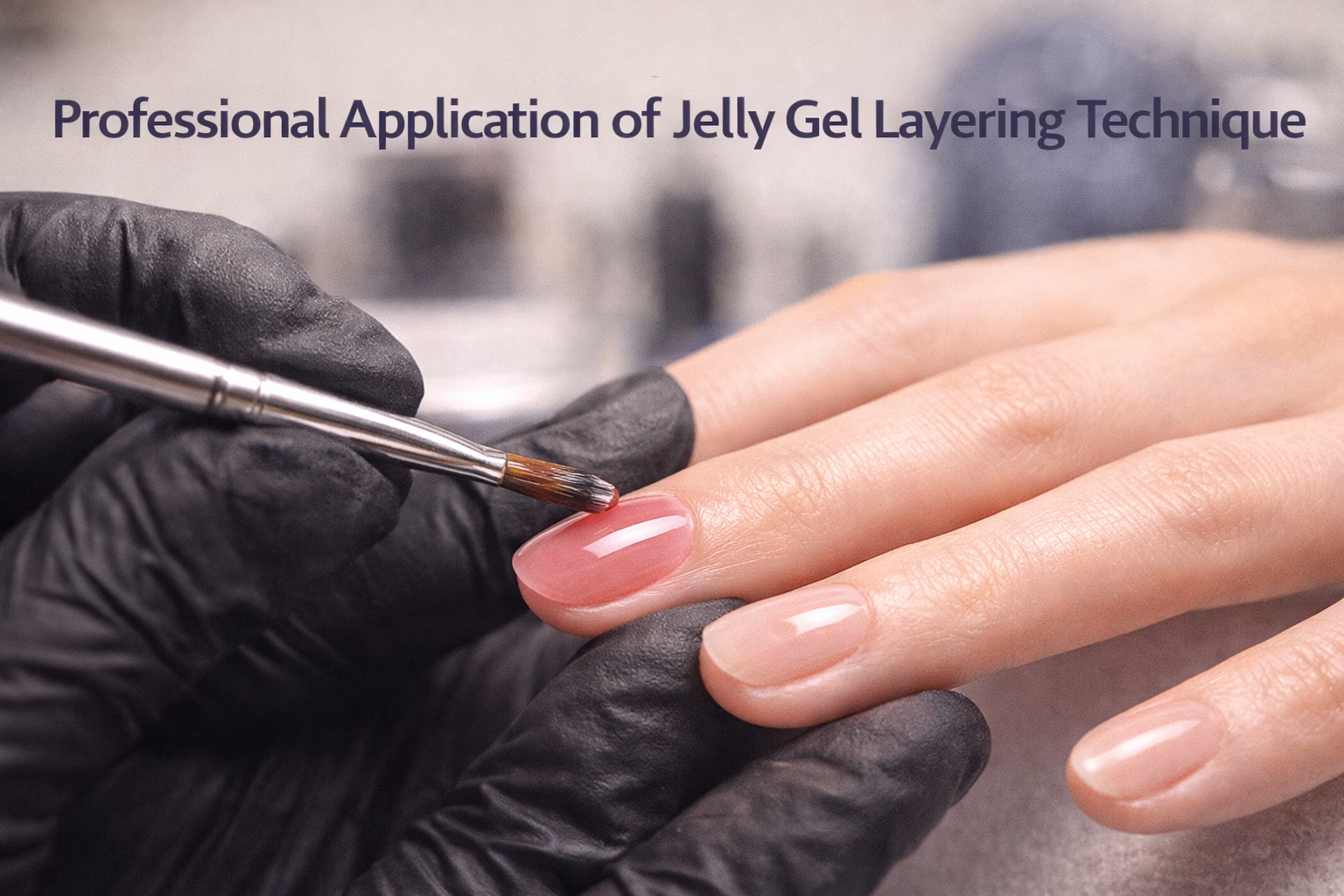
1. Layer Thickness
Thicker layer:
- Reduced transparency
- Increased depth
- Risk of uneven curing
Thinner layer:
- Higher clarity
- Cleaner glass effect
- More predictable layering
Syrup gels perform best in thin layers.
Jelly gels tolerate moderate thickness.
2. Base Color Influence
Translucent gels interact with base tone.
Over white:
- Color appears brighter
Over nude:
- Color appears softer
Over milky:
- Diffusion increases
System planning must consider underlying tone.
3. Top Coat Gloss Level
High-gloss top coat:
- Enhances glass effect
Matte top coat:
- Converts jelly into frosted effect
Syrup gels rely heavily on gloss quality.
4. Pigment Family Interaction
Warm translucent tones stack differently from cool tones.
For example:
- Red jelly deepens quickly
- Blue syrup may appear darker in layering
Color theory matters more in translucent systems than opaque systems.
5. Cure Power & Clarity
Underpowered curing:
- Clouding
- Loss of transparency
- Micro-bubbles
Translucent gels require stable UV intensity to preserve clarity.
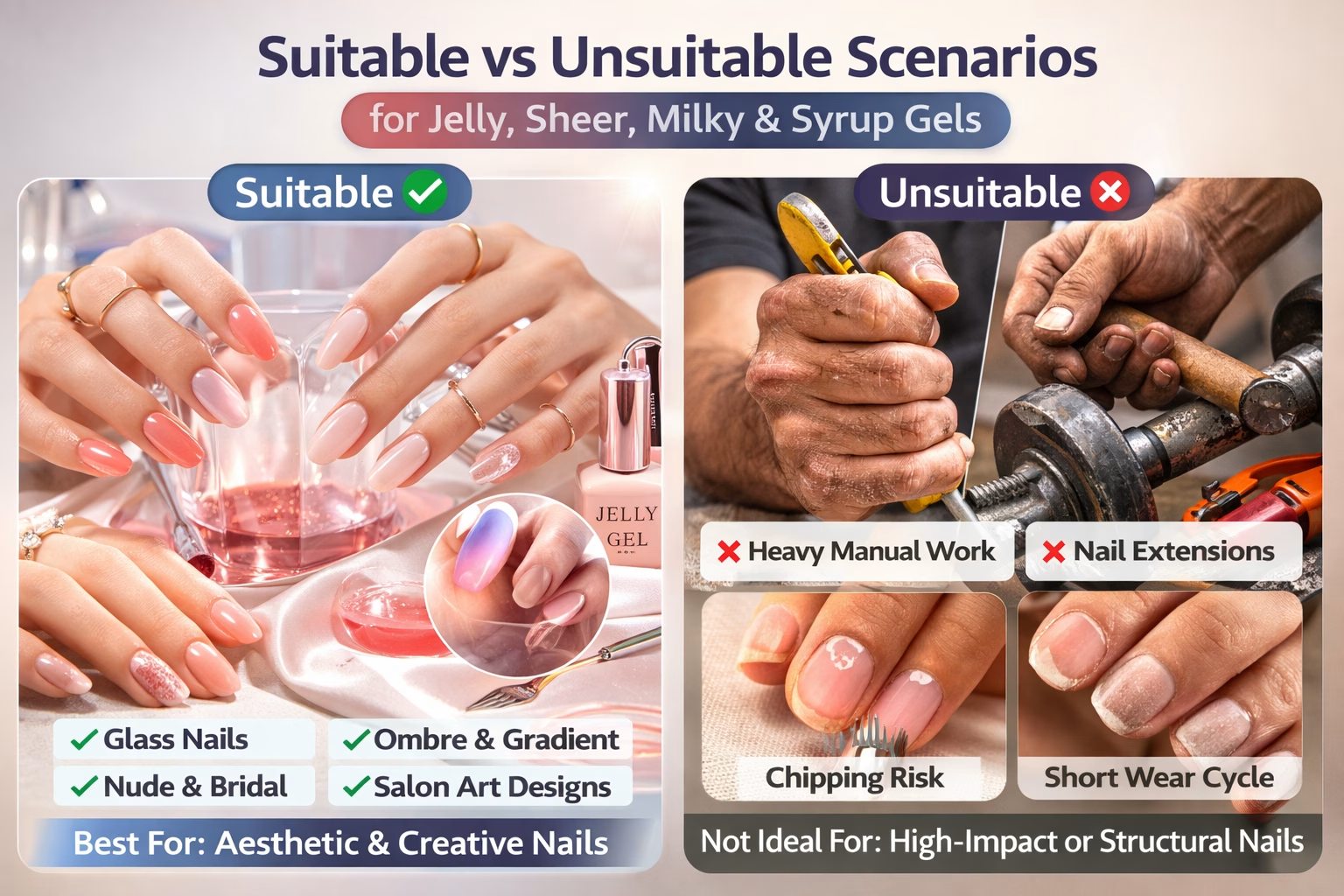
Suitable & Unsuitable Scenarios
Not every client or product line benefits from translucent systems.
Suitable For:
- Korean-style nail trends
- Glass nail aesthetics
- Nude bridal collections
- Youth market seasonal drops
- Layer art salons
- Ombre-focused designs
Unsuitable For:
- Heavy extension clients
- One-coat fast salon workflows
- High-wear industrial professions
- Clients requesting bold opaque coverage
Translucent gels require layering and patience.
They are aesthetic-forward systems.
Common Misunderstandings
This category suffers from severe terminology confusion.
Misunderstanding 1: Jelly and Syrup Are the Same
They overlap visually, but:
Jelly → Color-driven translucency
Syrup → Flow-driven translucency
Misunderstanding 2: Sheer Means Low Quality
Sheer is intentional minimal opacity — not weak pigment.
It is a design choice.
Misunderstanding 3: Milky Equals White
Milky is diffusion-based, not pure white coverage.
It softens underlying tone.
Misunderstanding 4: Translucent Gels Are Beginner Products
In reality:
Layer control requires advanced technique.
Syrup gradients require professional brush precision.
Misunderstanding 5: These Gels Replace Builder Systems
They do not.
They sit above structural layers.
Never confuse aesthetic translucency with reinforcement function.

X in Integrated Nail Systems
In a full professional nail architecture:
Natural Nail
↓
Base / Rubber Base
↓
Builder (if needed)
↓
Milky (optional diffusion)
↓
Jelly / Sheer / Syrup
↓
Top Coat
Milky gel often acts as a transitional optical layer.
Syrup and jelly function as expressive layers.
Sheer stabilizes nude collections.
They do not operate independently.
They operate as visual modules within a complete system.
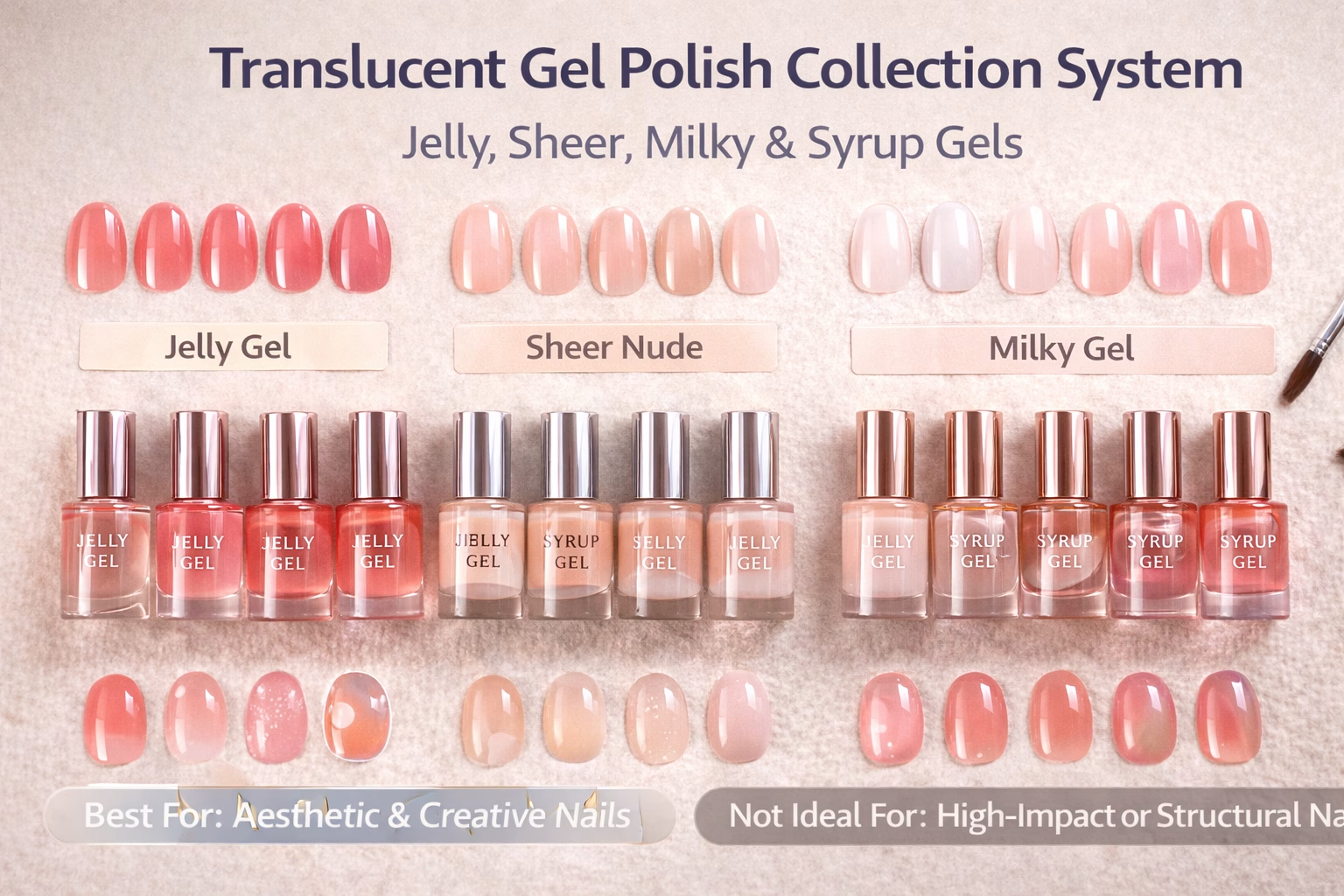
Role in Professional Product System
For brands and OEM developers, translucent gels serve strategic roles.
1. Collection Depth Expansion
Adding jelly and syrup variants allows:
- Same base color, multiple transparency levels
- Expanded SKU without new pigment families
2. Seasonal Trend Activation
Translucent gels dominate:
- Spring collections
- Summer glass effects
- Korean-inspired drops
3. Beginner-Friendly Retail Entry
Sheer and milky gels:
- Reduce application error
- Hide brush marks
- Increase beginner confidence
4. Professional Art Positioning
Syrup systems:
- Elevate brand image
- Support layered art marketing
- Enhance visual social media impact
5. Commercial Balance Strategy
A balanced brand system includes:
- Opaque core line
- Structural reinforcement line
- Translucent artistic line
Jelly, sheer, milky, and syrup gels form the artistic layer of a complete gel ecosystem.
Brands often combine jelly, milky, and syrup gels into curated mini collections that emphasize layering versatility and tonal depth.
For strategic product line planning, see our detailed guide on How to Build a Best-Selling Gel Polish Starter Collection.
Conclusion
Jelly gel, sheer gel, milky gel, and syrup gel belong to the same optical family — but they are not interchangeable.
They differ in:
- Pigment concentration
- Light diffusion
- Viscosity behavior
- System positioning
Understanding these distinctions allows:
- Better product development
- Clearer category communication
- More strategic collection planning
- Stronger professional positioning
For nail brands and buyers, translucent gel systems are no longer niche trends — they are structural components of modern gel polish architecture.