

Introduction: Why These Four Gels Are Constantly Confused
In professional nail systems, few product categories generate more confusion than Builder Gel, BIAB, Rubber Base, and Hard Gel.
On the surface, they all appear to serve a similar purpose:
They strengthen nails.
They add structure.
They improve durability.
They support overlays and extensions.
As a result, many brands, salons, and even educators treat them as interchangeable “strengthening gels.”
In reality, they are four distinct engineering systems, designed for different mechanical loads, removal behaviors, formulation priorities, and service workflows.
Misunderstanding these differences leads to:
- Incorrect product positioning
- Structural failures
- Premature lifting
- Removal damage
- Customer dissatisfaction
- Costly reformulations
This guide explains how these four systems actually differ, how they function inside professional nail architectures, and how brands should deploy them strategically.
1. What Are Builder Gel, BIAB, Rubber Base, and Hard Gel?
1.1 Category Definitions
Although often grouped together, these products belong to different structural classes.
Строительный гель
Builder gel is a high-viscosity structural gel designed to build apexes, reinforce weak nails, and support moderate extensions.
It focuses on:
- Load-bearing capacity
- Shape control
- Structural balance
- Medium-to-high thickness tolerance
Builder gels may be soak-off or non-soak-off depending on formulation.
BIAB (Builder In A Bottle)
BIAB is a bottle-format builder system that combines moderate structure with application convenience.
It focuses on:
- Self-leveling control
- Medium reinforcement
- Faster salon workflows
- Reduced filing
BIAB is primarily designed for overlays and short extensions.
Rubber Base
Rubber base is a flexible reinforcement base system.
It focuses on:
- Adhesion enhancement
- Flexibility matching natural nails
- Impact absorption
- Peel resistance
It does not build significant structure.
Hard Gel
Hard gel is a non-soak-off structural polymer system.
It focuses on:
- Maximum rigidity
- Long extensions
- Extreme durability
- Permanent architecture
Hard gels must be filed off.
1.2 Functional Classification
From an engineering standpoint:
| System | Primary Role | Flexibility | Removal |
|---|---|---|---|
| Rubber Base | Adhesion + Flex | High | Soak-off |
| BIAB | Light structure | Medium | Soak-off |
| Строительный гель | Structural support | Medium–Low | Soak/File |
| Hard Gel | Full architecture | Low | File only |
Они not interchangeable.
Each occupies a different layer in professional nail construction.
1.3 Structural Boundaries
Before comparing performance, it is important to understand that:
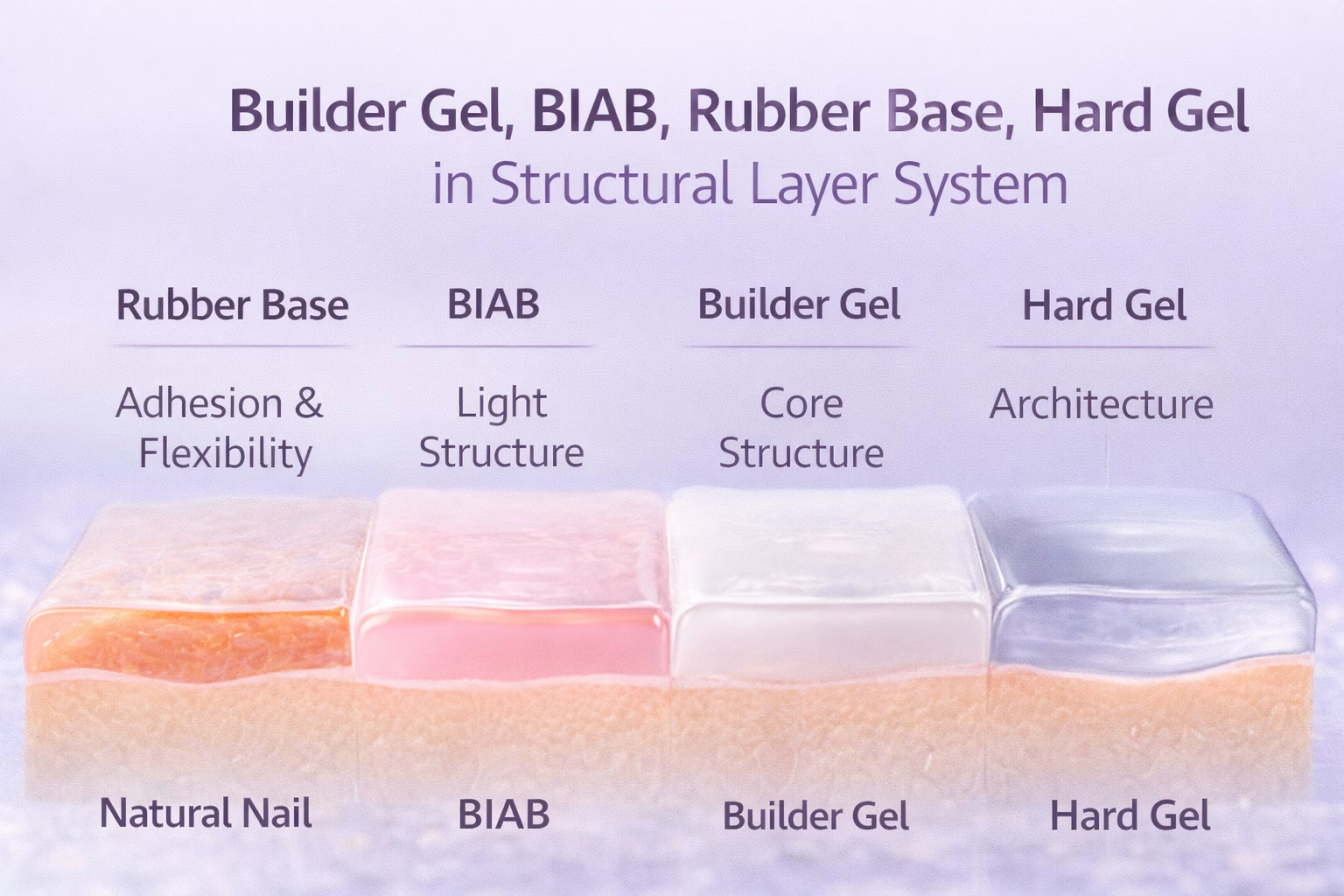
- Rubber Base = Foundation layer
- BIAB = Lightweight frame
- Builder Gel = Structural beam
- Hard Gel = Architectural skeleton
If you are new to structural gel categories, you may first review the foundational framework here:
Builder Gel, BIAB, Rubber Base: A Buyer’s Guide for Professional Nail Brands
2. How They Work: Core Mechanisms Compared
Understanding how these systems behave requires examining polymer networks, crosslink density, and stress distribution.
2.1 Rubber Base: Elastic Adhesion Network
Rubber bases use elastomer-modified polymers.
Their internal structure allows:
- Controlled stretching
- Stress dispersion
- Nail plate movement tolerance
This prevents lifting on soft or thin nails.
However, elasticity limits structural load.
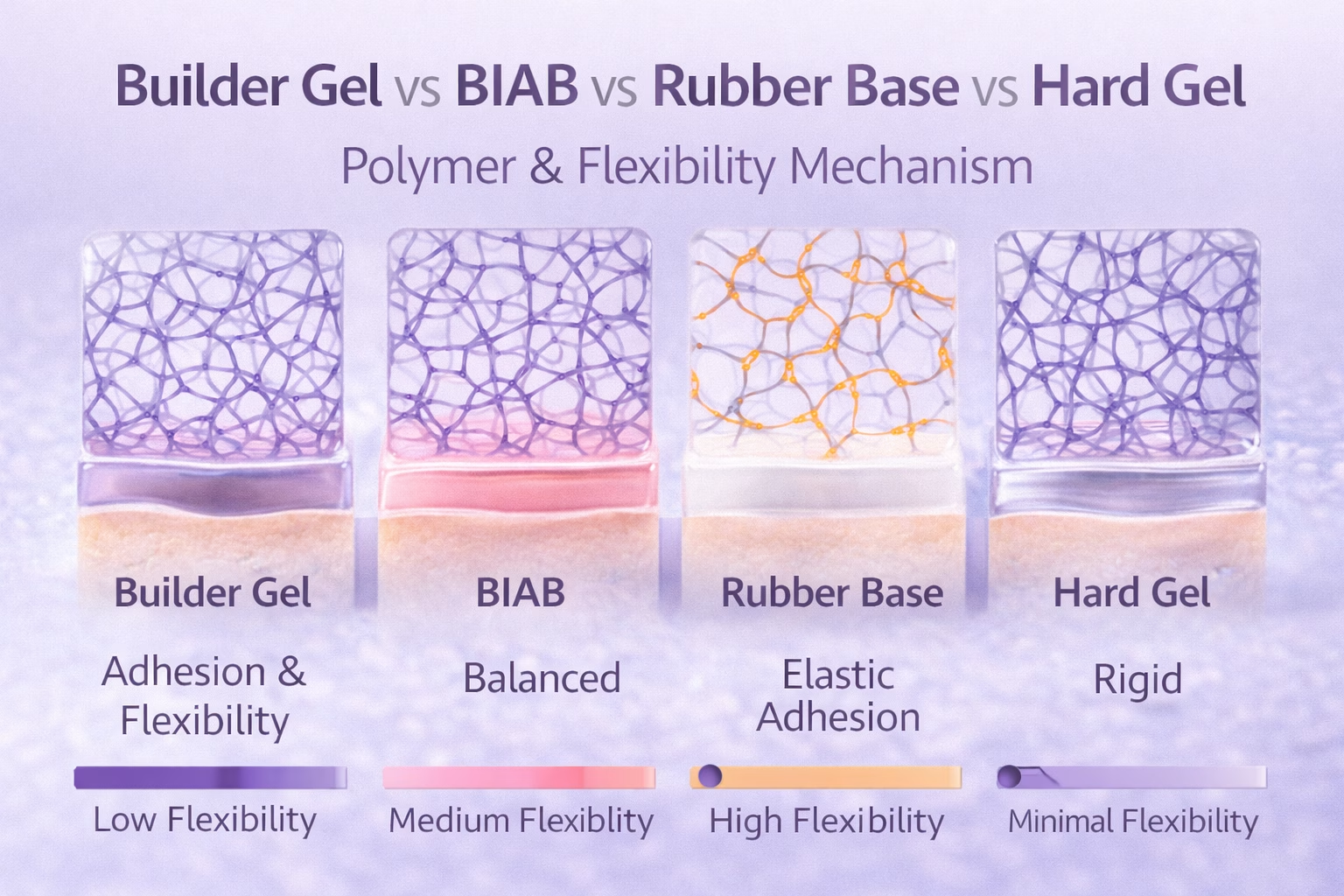
2.2 BIAB: Balanced Self-Leveling Framework
BIAB systems use:
- Medium crosslink density
- Controlled viscosity
- Optimized surface tension
This enables:
- Smooth overlays
- Minimal filing
- Consistent thickness
But structural capacity remains limited.
2.3 Builder Gel: Load-Bearing Polymer Matrix
Builder gels increase:
- Resin density
- Filler integration
- Structural modulus
This allows:
- Apex formation
- Stress channeling
- Shape retention
Builder gels function as structural members.
2.4 Hard Gel: Rigid Crosslinked Architecture
Hard gels form highly crosslinked polymer networks.
Characteristics include:
- Minimal flex
- High compressive strength
- Permanent form retention
This makes them ideal for extreme extensions.
But poor flexibility increases break risk on weak nails.
2.5 Mechanical Comparison
| System | Elasticity | Strength | Shape Control |
|---|---|---|---|
| Rubber Base | High | Low | Minimal |
| BIAB | Medium | Medium | Moderate |
| Builder | Low–Medium | High | High |
| Hard Gel | Very Low | Very High | Maximum |
Each system is engineered for a different stress profile.
To fully understand how structural gels interact with base layers and reinforcement systems, it is helpful to first review functional gel system mechanics, which explains how professional gels are designed to perform within integrated nail systems.
3. Core Roles in Professional Nail Systems
These gels do not exist independently.
They function inside layered nail architectures.
3.1 System Layering Logic
A typical professional structure:
- Adhesion layer
- Reinforcement layer
- Structural layer
- Color/effect layer
- Protection layer
Each product type maps to a specific role.
3.2 Rubber Base: Stability Foundation
Rubber base works as:
- Adhesion enhancer
- Flex buffer
- Base stabilizer
It protects weak nail plates from rigid stress.
3.3 BIAB: Efficiency-Oriented Reinforcement
BIAB serves as:
- Combined base + builder
- Speed optimizer
- Salon workflow reducer
It reduces step count in routine services.
3.4 Builder Gel: Structural Backbone
Builder gel provides:
- Apex support
- Stress distribution
- Load transfer
It is the core of medium-strength systems.
For full structural theory, see:
Гель для наращивания: Полное руководство по продукции для профессиональных покупателей ногтей
3.5 Hard Gel: Architectural Framework
Hard gel enables:
- Long sculpted forms
- Extreme lengths
- Permanent overlays
It functions like steel reinforcement in construction.
3.6 Role Summary
| Layer | Product |
|---|---|
| Adhesion | Rubber Base |
| Light Structure | BIAB |
| Core Structure | Builder |
| Architecture | Hard Gel |
Professional systems succeed when each layer is correctly assigned.
4. Major Types and Structural Variations
Although Builder Gel, BIAB, Rubber Base, and Hard Gel are category-level systems, each contains important internal variations.
Understanding these variations is essential for proper product selection and positioning.
4.1 Builder Gel Variations
Builder gels are commonly differentiated by:
● Viscosity Profile
- Medium-thick (overlay focused)
- Thick (sculpting focused)
- Extra-thick (form building)
● Removal Behavior
- Soak-off builder gel
- Hybrid builder gel
- Non-soak-off builder gel
● Transparency System
- Clear structural
- Milky reinforcement
- Tinted builder
These affect apex stability and filing tolerance.
For a deeper understanding of formulation structure, curing behavior, and long-term durability, refer to our complete builder gel technical guide.
4.2 BIAB Variations
BIAB systems mainly vary by:
● Flow Control
- Fast self-leveling
- Balanced leveling
- Slow leveling
● Reinforcement Strength
- Light BIAB
- Medium BIAB
- Reinforced BIAB+
● Base Integration
- Pure BIAB
- BIAB + rubber base blend
- BIAB + fiber blend
High-end BIAB products often integrate micro-fibers for added support.
Brands developing beginner-friendly reinforcement systems should also consult our professional BIAB buyer’s guide for positioning and formulation strategies.
4.3 Rubber Base Variations
Rubber bases differ primarily in:
● Elastic Modulus
- Soft rubber base
- Balanced rubber base
- Reinforced rubber base
● Adhesion Chemistry
- Acid-modified
- Primer-free
- Universal adhesion
● Thickness Range
- Thin adhesion base
- Medium reinforcement base
- Cushion base
Excessive softness may cause instability under heavy layers.
4.4 Hard Gel Variations
Hard gels are classified by:
● Sculpting Purpose
- Extension hard gel
- Overlay hard gel
- Builder hard gel
● Optical Design
- Clear
- Crystal
- Camouflage
● Thermal Control
- Low-heat hard gel
- Standard hard gel
- High-density hard gel
Thermal management is critical in hard gel systems.
4.5 Structural Variation Summary
| System | Key Variation Factor |
|---|---|
| Builder | Viscosity / Removal |
| BIAB | Flow / Strength |
| Rubber | Elasticity / Adhesion |
| Hard | Rigidity / Heat |
These variations determine real-world performance more than marketing labels.
5. Builder vs BIAB vs Rubber Base vs Hard Gel — Preventing Professional Confusion
One of the biggest problems in professional education is misclassification.
Many systems fail because products are chosen based on appearance, not mechanics.
5.1 Common Substitution Errors
❌ Using BIAB Instead of Builder
Result:
- Flat apex
- Stress cracking
- Premature lifting
❌ Using Rubber Base Instead of BIAB
Result:
- Insufficient reinforcement
- Deformation
- Shape collapse
❌ Using Builder Instead of Hard Gel
Result:
- Extension instability
- Breakage
- Excessive thickness
❌ Using Hard Gel on Weak Nails
Result:
- Nail trauma
- Detachment
- Client pain
Each system has load limits.
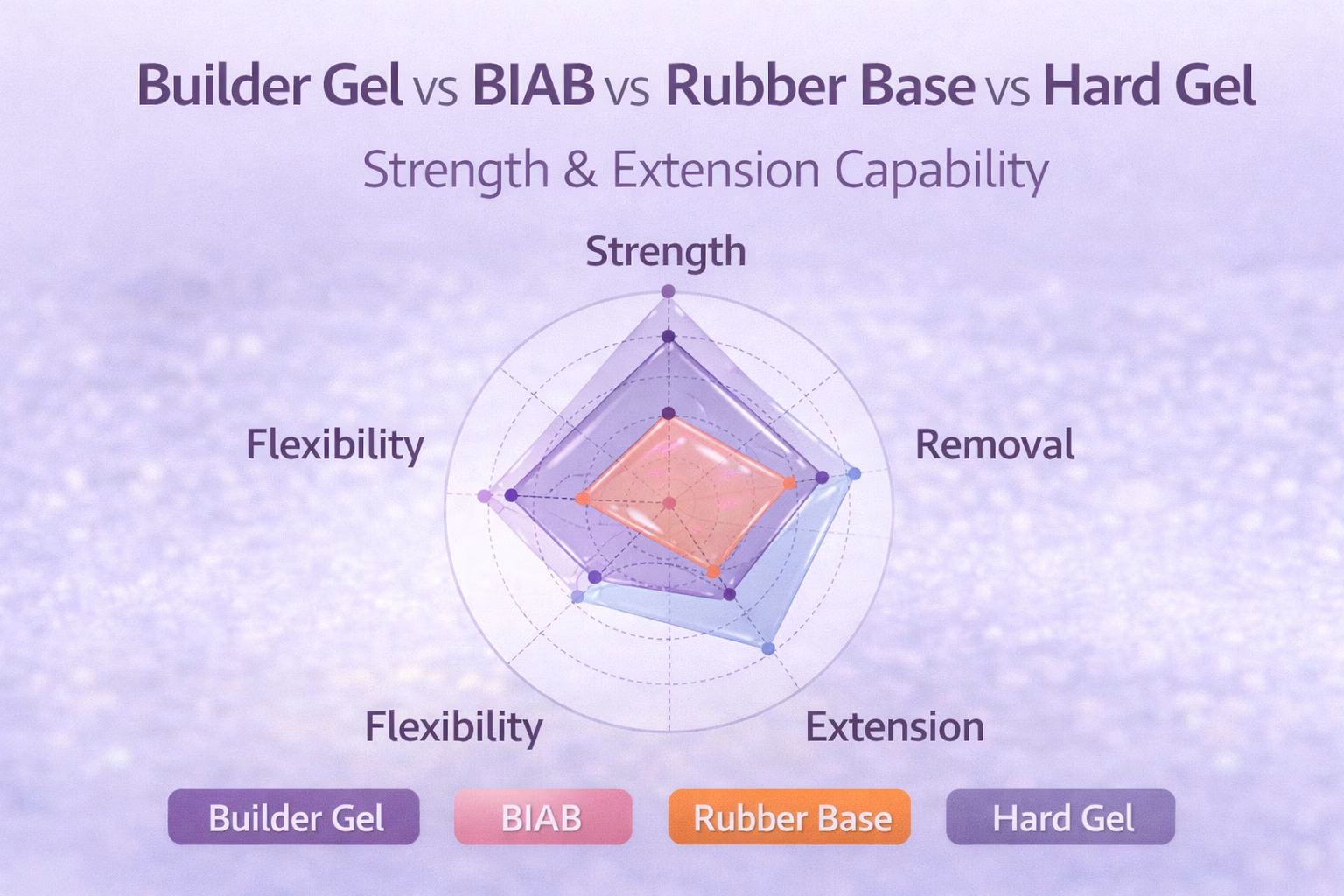
5.2 Structural Comparison Table
| Factor | Rubber | BIAB | Builder | Hard |
|---|---|---|---|---|
| Strength | Low | Medium | High | Very High |
| Flex | High | Medium | Low–Med | Very Low |
| Extension | No | Short | Medium | Long |
| Removal | Soak | Soak | Soak/File | File |
These limits must guide service design.
5.3 Relationship to Soft and Hard Gel Categories
Many buyers confuse “builder gel” with “hard gel.”
For detailed clarification, refer to:
Мягкий гель против твердого геля: Практическое руководство покупателя для профессионалов ногтевого сервиса
6. Application Logic and Performance Variables
Performance is determined not only by formulation, but by workflow variables.
6.1 Nail Plate Condition
| Nail Type | Recommended System |
|---|---|
| Soft / Thin | Rubber + BIAB |
| Normal | BIAB / Builder |
| Strong | Builder / Hard |
| Damaged | Rubber + Builder |
Ignoring nail condition is the main cause of failure.
6.2 Layer Thickness Control
Excess thickness causes:
- Heat spikes
- Curing stress
- Internal cracking
Insufficient thickness causes:
- Collapse
- Weak apex
- Poor durability
Each system has optimal thickness windows.
6.3 Lamp Compatibility
Different systems require:
- Specific wavelength balance
- Adequate power density
- Proper curing time
Hard gels are especially sensitive to lamp mismatch.
6.4 Environmental Variables
Humidity, temperature, and storage affect:
- Viscosity
- Leveling speed
- Adhesion
Professional systems require controlled environments.
6.5 Workflow Matching
| Service Type | Best System |
|---|---|
| Express overlay | BIAB |
| Nail repair | Builder |
| Sculpted extension | Hard |
| Weak nail rehab | Rubber + Builder |
Workflow must match material behavior.
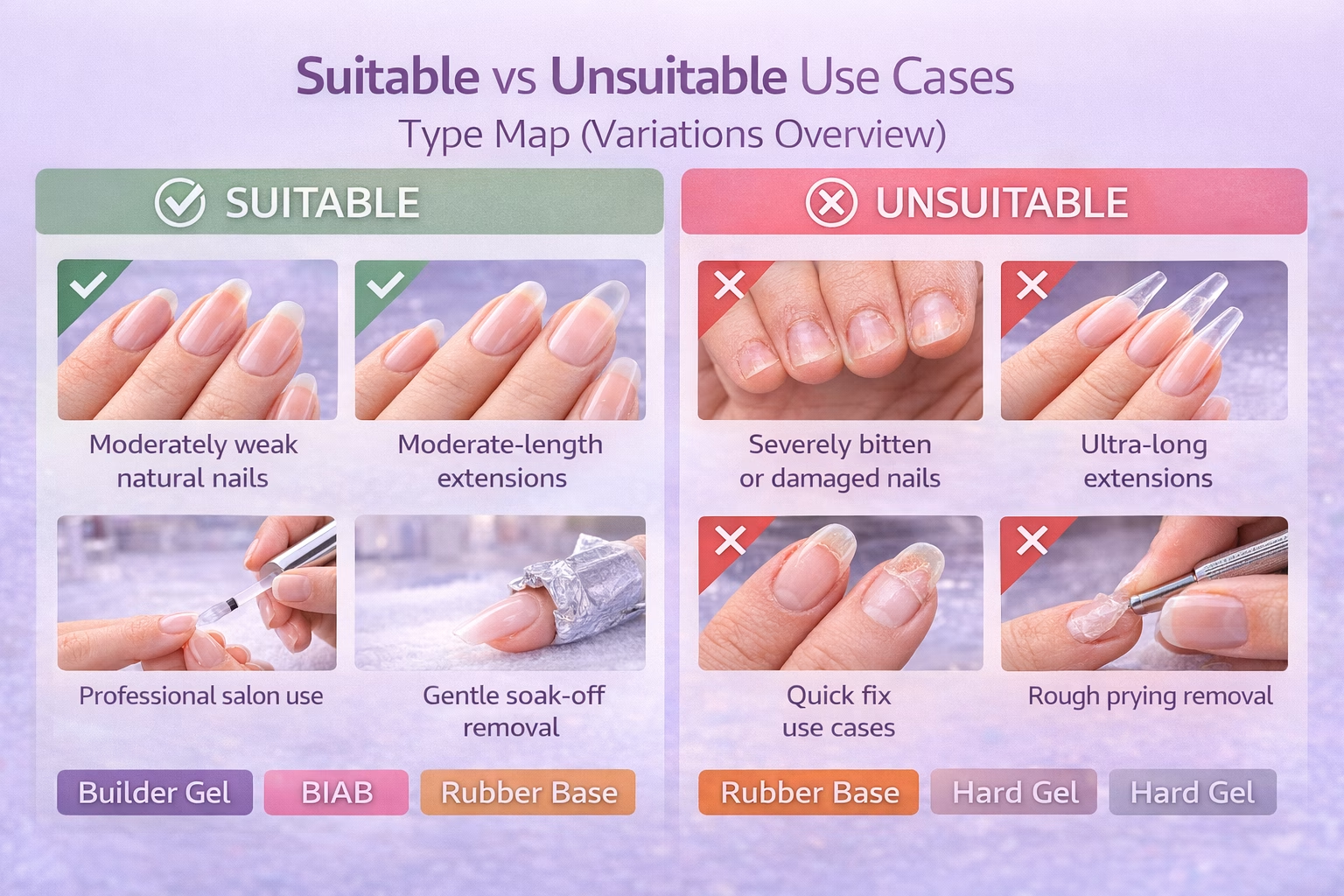
7. Suitable and Unsuitable Use Scenarios
Every system has boundaries.
Crossing them causes predictable failures.
7.1 Rubber Base
Suitable:
- Weak nails
- Flexible overlays
- Peel prevention
Unsuitable:
- Extensions
- Heavy designs
- Thick builds
7.2 BIAB
Suitable:
- Natural overlays
- Medium wear clients
- Salon efficiency
Unsuitable:
- Long extensions
- Extreme apex
- Heavy sculpting
7.3 Builder Gel
Suitable:
- Apex building
- Medium extensions
- Structural repair
Unsuitable:
- Ultra-long forms
- Hyper-flex nails
7.4 Hard Gel
Suitable:
- Sculpted architecture
- Long length
- Competition nails
Unsuitable:
- Weak nails
- Beginners
- Fast salons
7.5 Scenario Mapping
Correct scenario mapping prevents 80% of complaints.
8. Common Professional Misunderstandings
Despite years of market education, several myths persist.
8.1 “BIAB Replaces Builder Gel”
False.
BIAB replaces light builder use, not structural builder systems.
8.2 “Rubber Base Is Just Thick Base”
False.
Rubber base is a mechanical buffer, not just thickness.
8.3 “Hard Gel Is Always Better”
False.
Rigidity without compatibility creates damage.
8.4 “Soak-Off Means Weak”
False.
Modern builder systems achieve high strength while remaining removable.
8.5 “One System Fits All Clients”
False.
Professional systems require segmentation.
9. Position in Integrated Nail Systems
Professional nail systems are not collections of isolated products.
Они engineered ecosystems.
Builder gel, BIAB, rubber base, and hard gel must function together across multiple service layers, client profiles, and product cycles.
n modern salon systems, structural gels must coordinate with effect layers and finishing products. Our guide to integrated professional gel system explains how different gel categories work together commercially and technically.
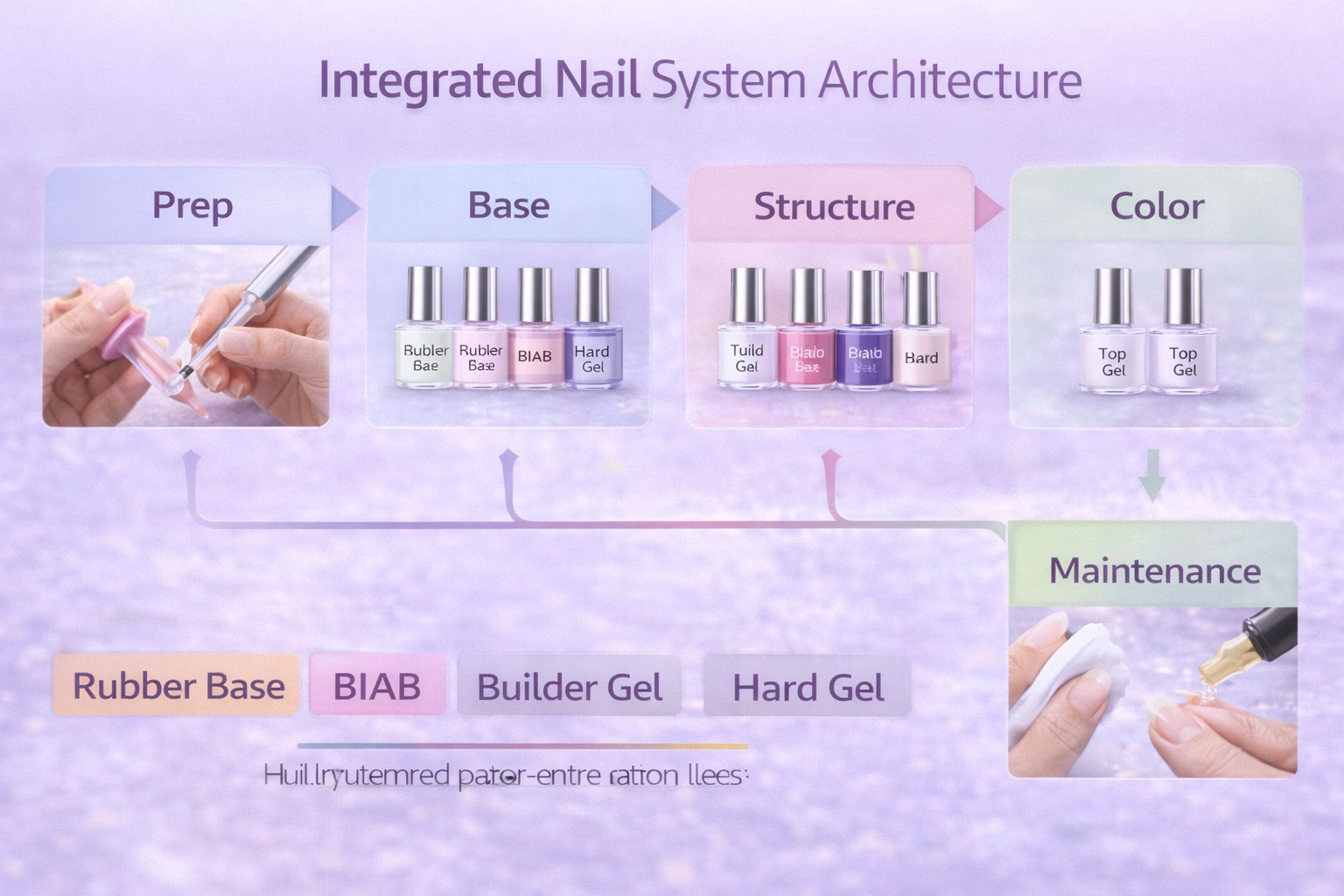
9.1 Layered System Architecture
A complete professional system follows this logic:
- Preparation layer
- Adhesion layer
- Flexibility layer
- Structural layer
- Design layer
- Protection layer
Each gel category maps to one or more layers.
| Layer | Primary Product |
|---|---|
| Adhesion | Rubber Base |
| Flexibility | Rubber / BIAB |
| Structure | Builder |
| Architecture | Hard Gel |
| Design | Color / Effect |
| Protection | Верхнее покрытие |
This architecture prevents functional overlap.
9.2 Compatibility Management
High-performing systems prioritize:
- Chemical compatibility
- Curing synchronization
- Shrinkage alignment
- Thermal balance
Incompatible layering creates internal stress.
9.3 Modular System Design
Modern professional brands adopt modular frameworks.
This allows:
- Custom service stacks
- Regional adaptation
- Price segmentation
- Private label scaling
Each gel type becomes a configurable module.
9.4 Training System Integration
Educational systems mirror product architecture.
Training modules are designed around:
- Foundation systems
- Reinforcement systems
- Structural systems
- Advanced architecture systems
This improves technician consistency.
9.5 Lifecycle Management
Integrated systems manage:
- Initial application
- Maintenance cycles
- Refill strategies
- Removal protocols
This reduces long-term damage.
10. Role in Professional Product Systems
Beyond salon services, these systems play strategic roles in brand portfolios.
10.1 Portfolio Structuring
Professional brands structure their catalogs by:
- Entry-level (Rubber / BIAB)
- Mid-tier (Builder)
- Premium (Hard systems)
- Specialist (Hybrid systems)
This supports upselling.
10.2 Market Segmentation
Different regions favor different systems:
| Market | Dominant System |
|---|---|
| Europe | BIAB / Builder |
| USA | Builder / Hard |
| Middle East | Hard / Builder |
| Asia | BIAB / Rubber |
Portfolio planning must reflect geography.
10.3 OEM/ODM Development Logic
Manufacturers develop systems by:
- Stress testing
- Compatibility testing
- Removal testing
- Stability testing
This ensures scalable quality.
10.4 Certification and Compliance
Each category has distinct compliance profiles.
- Soak-off systems → solvent regulations
- Hard gels → monomer controls
- Rubber systems → allergen focus
Compliance must match positioning.
10.5 Commercial Sustainability
Well-designed systems deliver:
- Lower complaint rates
- Higher retention
- Better training outcomes
- Stable repurchase cycles
This protects brand equity.
Conclusion: Choosing Systems, Not Products
Builder gel, BIAB, rubber base, and hard gel are not competitors.
Они structural components in a professional ecosystem.
Successful brands do not ask:
“What is the strongest gel?”
They ask:
“What structure does this client need?”
“What workflow fits this service?”
“What system scales sustainably?”
When systems are correctly designed:
- Performance improves
- Complaints decrease
- Brand authority increases
- Long-term loyalty grows
Professional success comes from system thinking—not isolated product choices.
For brands planning private label or scalable production, understanding the OEM gel development process is essential for balancing performance, cost, and long-term consistency.
Frequently Asked Questions (FAQ)
Q1: What is the main difference between builder gel and BIAB?
Builder gel is designed for structural building, extensions, and apex formation, while BIAB (Builder in a Bottle) focuses on reinforcement, convenience, and simplified application.
Q2: Is rubber base stronger than builder gel?
No. Rubber base provides flexibility and strong adhesion, but it does not offer the same structural strength and load-bearing capability as builder gel.
Q3: Can hard gel be soaked off like BIAB or rubber base?
Most hard gels are non-soak-off systems and must be removed by filing, while BIAB and rubber base are typically soak-off formulas.
Q4: Which system is best for weak or damaged natural nails?
For weak nails, BIAB and rubber base systems are usually more suitable due to their flexibility, bonding strength, and stress absorption properties.
Q5: Can builder gel, BIAB, rubber base, and hard gel be combined in one service?
Yes. Professional nail systems often combine multiple gel types depending on structural needs, durability requirements, and design goals.
Q6: Is BIAB a replacement for builder gel?
No. BIAB simplifies reinforcement services but cannot fully replace builder gel in advanced building, sculpting, or extension applications.
Q7: Which gel system is best for long nail extensions?
Hard gel and high-strength builder gel systems are more suitable for long extensions due to their superior rigidity and stability.
Q8: How should brands choose between these systems for product development?
Brands should base their choice on target users, service complexity, training systems, and long-term product portfolio strategy.