

1 — Executive Summary
The US gel polish market 2026 is entering a critical transformation phase, driven by BIAB adoption, category restructuring, regulatory shifts, and evolving professional demand.
Over the past five years, the global nail industry has undergone a structural transformation. Traditional nail polish, once the dominant category, has gradually ceded market share to UV gel systems, builder gels, and long-wear professional solutions. This shift has been particularly pronounced in the United States, which has emerged as the world’s most commercially influential market for premium and system-based nail products.
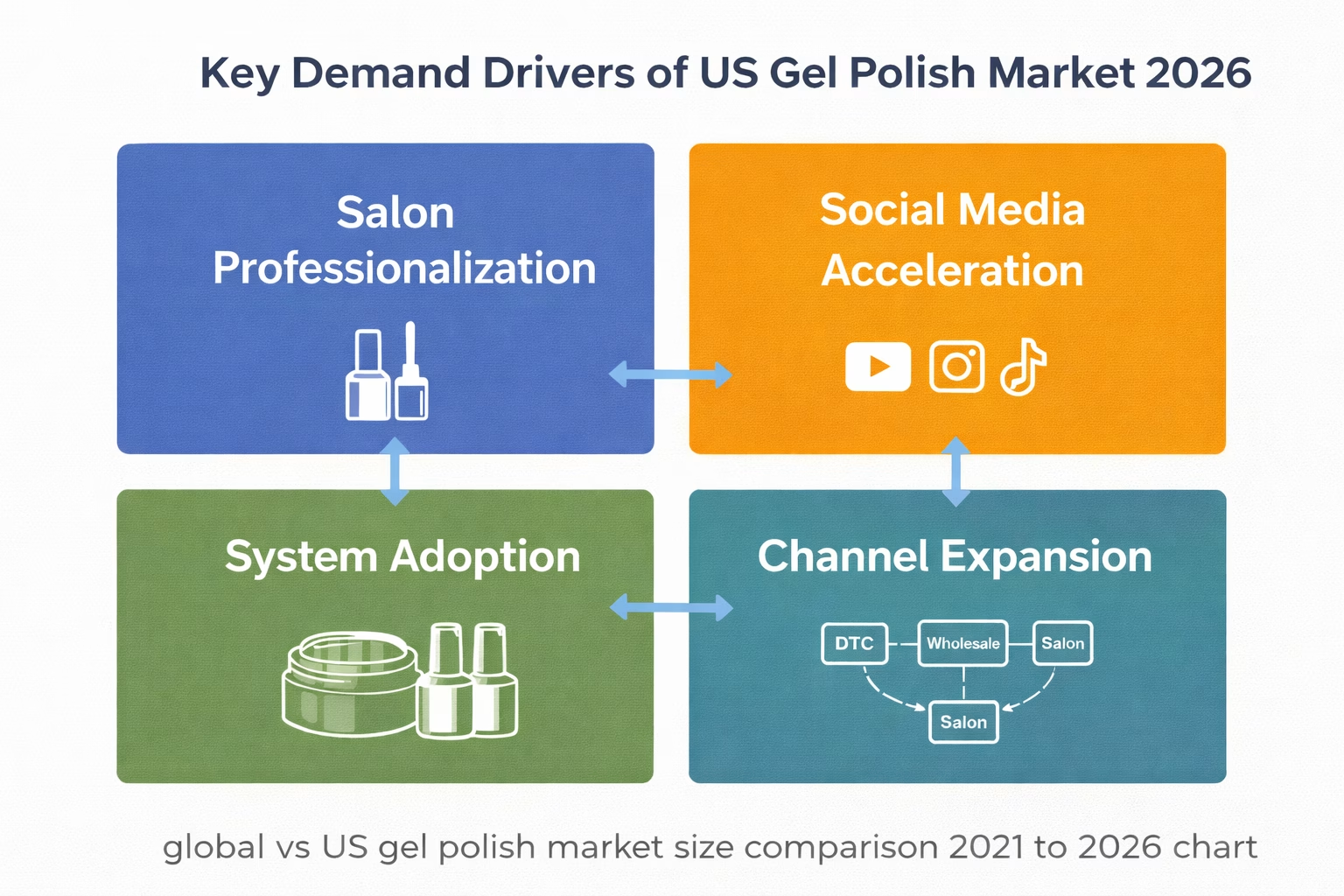
From 2021 to 2025, the US gel polish segment benefited from three major forces:
- The rapid professionalization of independent salons
- The normalization of structured nail systems such as BIAB and builder gels
- The acceleration of trend diffusion through social media platforms
As a result, gel-based services and retail systems now represent the core growth engine of the North American nail market.
Looking toward 2026, available industry indicators suggest that this momentum will continue, but with important structural adjustments. Growth will increasingly be driven not by volume expansion alone, but by:
- System integration (base–builder–color–top ecosystems)
- Compliance-oriented reformulation
- Packaging and branding differentiation
- Channel-specific product strategies
This report analyzes historical data, market signals, and category-level developments to provide a comprehensive outlook on the US gel polish market through 2026.
Key Findings
- The global nail polish market has maintained stable growth since 2021, with gel systems consistently outperforming traditional polish.
- The United States remains the largest single-country market for professional gel products in value terms.
- BIAB and structural gels are transitioning from niche upgrades to foundational service products.
- Jelly, sheer, and neutral palettes are becoming permanent components of core assortments.
- Regulatory pressure in Europe is indirectly reshaping US formulation standards.
- Packaging and bottle design are emerging as major competitive differentiators.
- By 2026, system-based product portfolios will outperform single-product strategies in both wholesale and DTC channels.
For manufacturers, brand owners, and distributors, 2026 will represent a consolidation phase in which operational capability and product system design will determine long-term competitiveness.
2 — Global Nail Market Baseline: 2021–2025 Retrospective
2.1 Global Market Scale and Growth
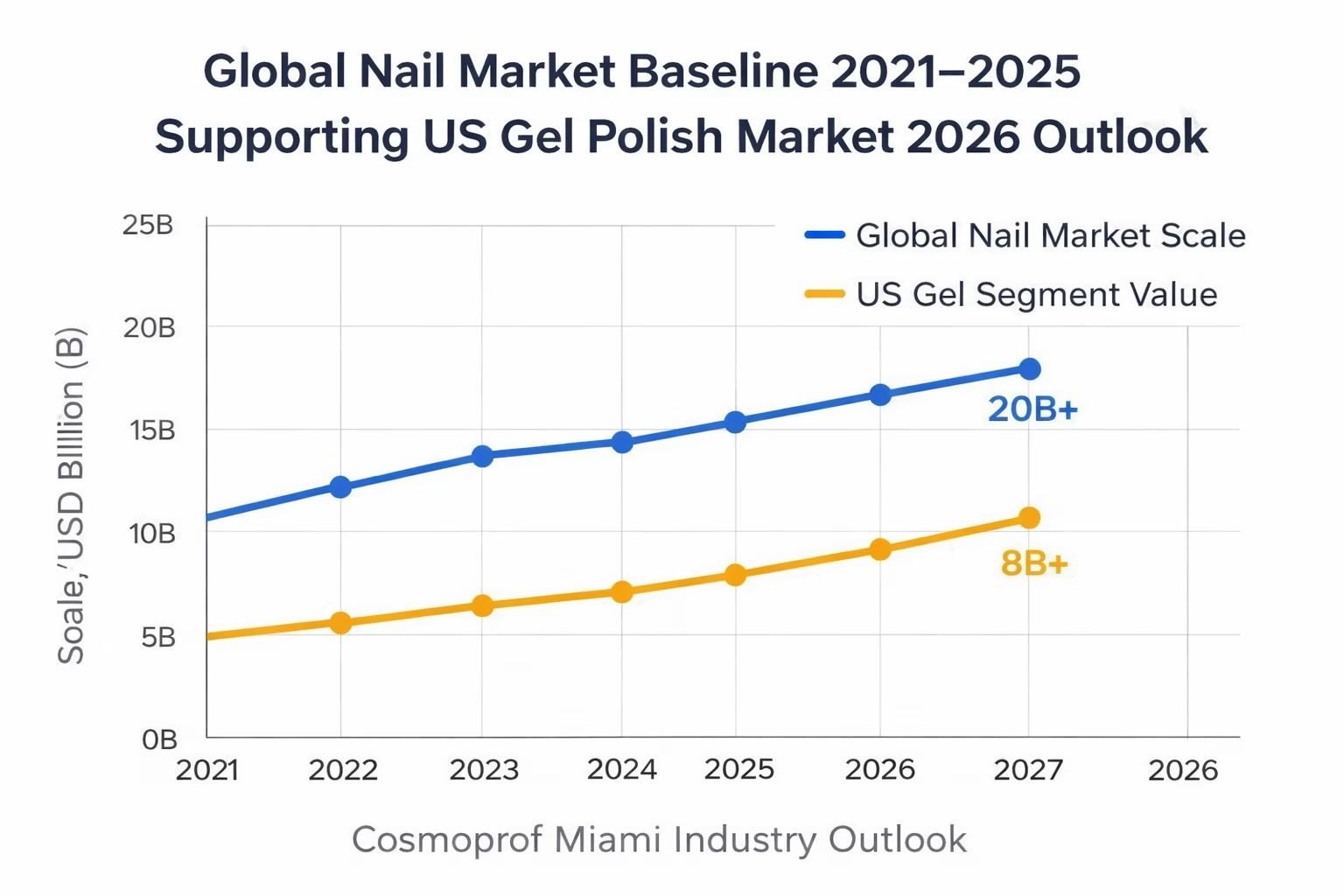
Between 2021 and 2025, the global nail polish and nail care market demonstrated steady expansion despite macroeconomic disruptions.
According to multiple industry research firms, the global nail polish market was valued at approximately USD 15–17 billion in 2022 and is projected to exceed USD 20 billion by 2026. Compound annual growth rates during this period ranged from 5.5% to 7.5%, depending on category definitions and regional weighting.
Within this broader market, UV gel polish and builder systems consistently outpaced traditional lacquer products in growth.
Key structural trends include:
- Declining shelf space for classic air-dry polish in professional environments
- Increasing average service prices for gel-based treatments
- Rising penetration of hybrid and semi-permanent systems
By 2024, gel-based products accounted for more than half of total professional nail service revenue in North America and parts of Europe.
2.2 Regional Structure: North America, Europe, Asia-Pacific
North America
North America remains the most commercially mature market for gel polish systems. High service frequency, premium pricing, and strong brand loyalty support sustained revenue growth.
The US alone represents over 35% of global professional gel polish value.
Europe
Europe exhibits strong regulatory influence and high technical standards. Ingredient compliance, sustainability requirements, and certification frameworks drive frequent reformulation cycles.
European regulations increasingly affect global supply chains, including US-focused manufacturers.
Asia-Pacific
Asia-Pacific continues to grow in volume terms, especially in China, South Korea, and Southeast Asia. However, average selling prices remain lower than in North America.
Many formulation and packaging innovations originate in this region before being adapted for Western markets.
2.3 Structural Shift: From Product to System
From 2021 to 2025, the most important global trend was the transition from individual SKUs to integrated nail systems.
Instead of selling isolated color products, leading brands increasingly promoted complete ecosystems:
- Prep solutions
- Base coats
- Builder layers
- Color systems
- Top coats
- Removal products
This shift improved retention, stabilized reorder patterns, and increased lifetime customer value.
Manufacturers capable of delivering consistent performance across all system layers gained significant competitive advantages.
3 — The United States as the Global Demand Engine
3.1 Market Size and Economic Role
The United States represents the most strategically important market for gel polish suppliers worldwide.
Key characteristics include:
- High per-capita spending on professional nail services
- Dense salon networks
- Strong distribution infrastructure
- High adoption of premium systems
By 2025, industry estimates suggest that the US professional nail segment generated more than USD 6 billion annually in combined product and service revenue.
Gel-based services account for the majority of this value.
3.2 Professionalization of Independent Salons
One of the most important drivers of US market growth has been the professionalization of independent nail studios.
Compared with pre-2020 operations, today’s US salons typically exhibit:
- More standardized service protocols
- Higher product knowledge
- Increased focus on technical performance
- Greater willingness to invest in premium systems
This professionalization favors advanced gel systems over traditional polish.
BIAB, structured builders, and reinforced overlays are now widely considered baseline offerings rather than optional upgrades.
3.3 Influence of Social Media Platforms
Social media has become a central demand accelerator in the US nail industry.
Platforms such as TikTok, Instagram, and YouTube perform three critical functions:
- Trend discovery
- Technique education
- Product validation
Hashtags related to gel nails, builder systems, and structured overlays consistently generate billions of views.
This exposure shortens the product adoption cycle and increases demand volatility, but also expands overall market size.
Trends that previously took years to diffuse can now reach national adoption within months.
3.4 Consumer Demographics and Behavior
The core growth demographic in the US market remains:
- Women aged 18–35
- Urban and suburban professionals
- Social-media-active consumers
- High service frequency users
However, the market is gradually expanding into older and higher-income segments through wellness positioning and natural-look aesthetics.
Key behavioral shifts include:
- Preference for durability over frequent color changes
- Increased willingness to pay for nail health benefits
- Rising interest in minimalist and neutral palettes
- Stronger brand loyalty to system providers
These shifts favor structured gel systems over conventional polish formats.
4 — Category Forecast: Growth Segments Shaping the 2026 Market
By 2026, growth in the US gel polish market will be increasingly concentrated in a limited number of high-performance categories. Rather than expanding evenly across all product types, demand is converging around systems that improve service efficiency, durability, and aesthetic versatility.
Four segments are expected to dominate market expansion.
4.1 BIAB and Structural Builder Systems
From Optional Upgrade to Industry Standard
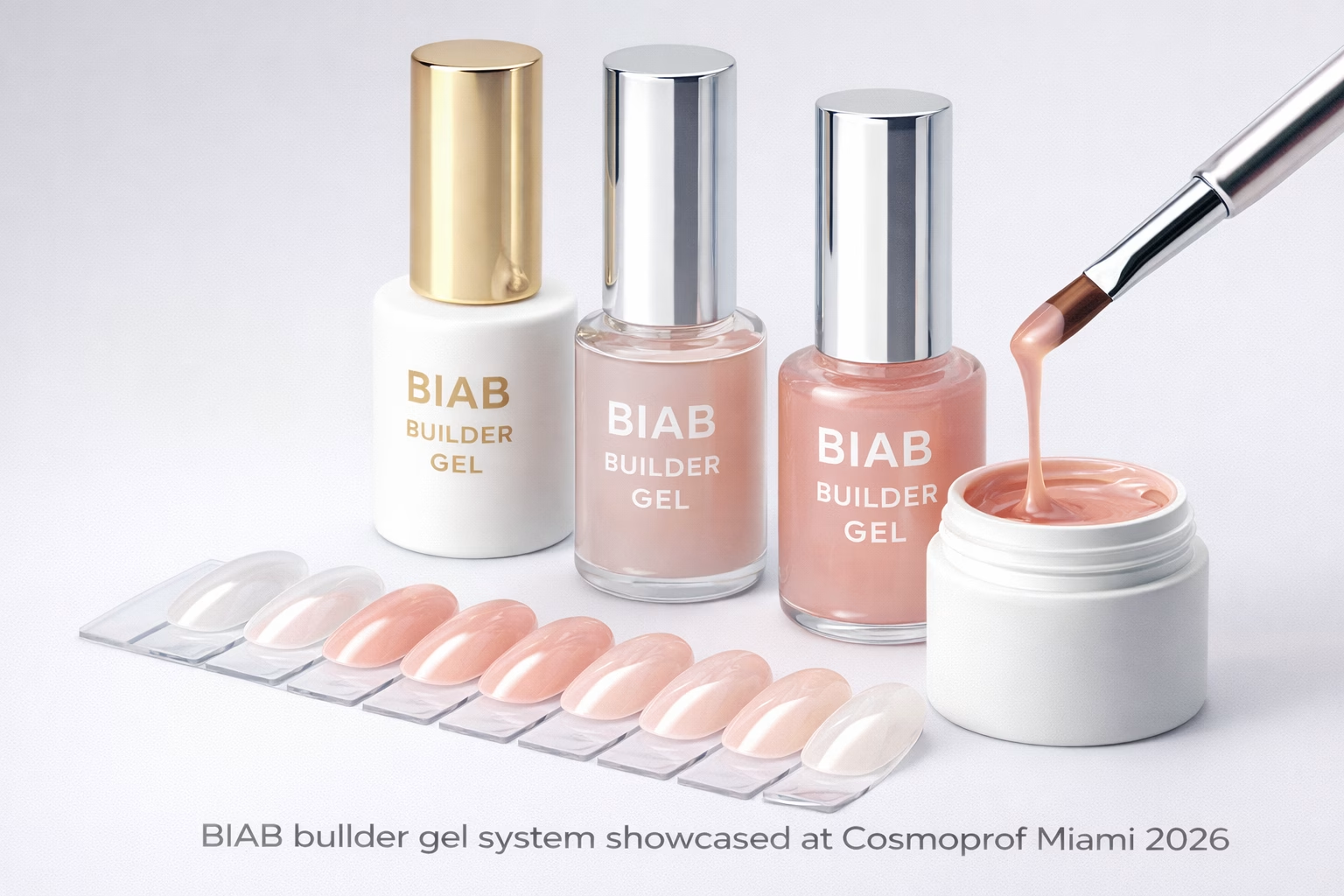
Builder In A Bottle (BIAB) systems and soft builder gels have experienced the fastest adoption rate among professional nail products since 2021.
Initially positioned as reinforcement solutions for weak nails, BIAB products are now widely used as foundational layers in standard salon services.
By 2025, many US salons had integrated BIAB into:
- Basic manicure packages
- Overlay services
- Short-extension applications
- Nail repair workflows
This transition reflects three structural advantages.
Operational Efficiency
BIAB reduces filing time, simplifies apex formation, and lowers rework rates. These benefits directly improve salon profitability in high-labor-cost environments.
Client Retention
Longer wear cycles and improved nail health outcomes increase repeat visits and subscription-style service patterns.
System Integration
BIAB systems integrate seamlessly with rubber bases, jelly colors, and structural tops, reinforcing ecosystem-based purchasing.
2026 Outlook
By 2026, BIAB and structural builders are expected to represent more than 30% of professional gel volume in the US market.
Brands lacking competitive builder platforms will face structural disadvantages in distribution negotiations.
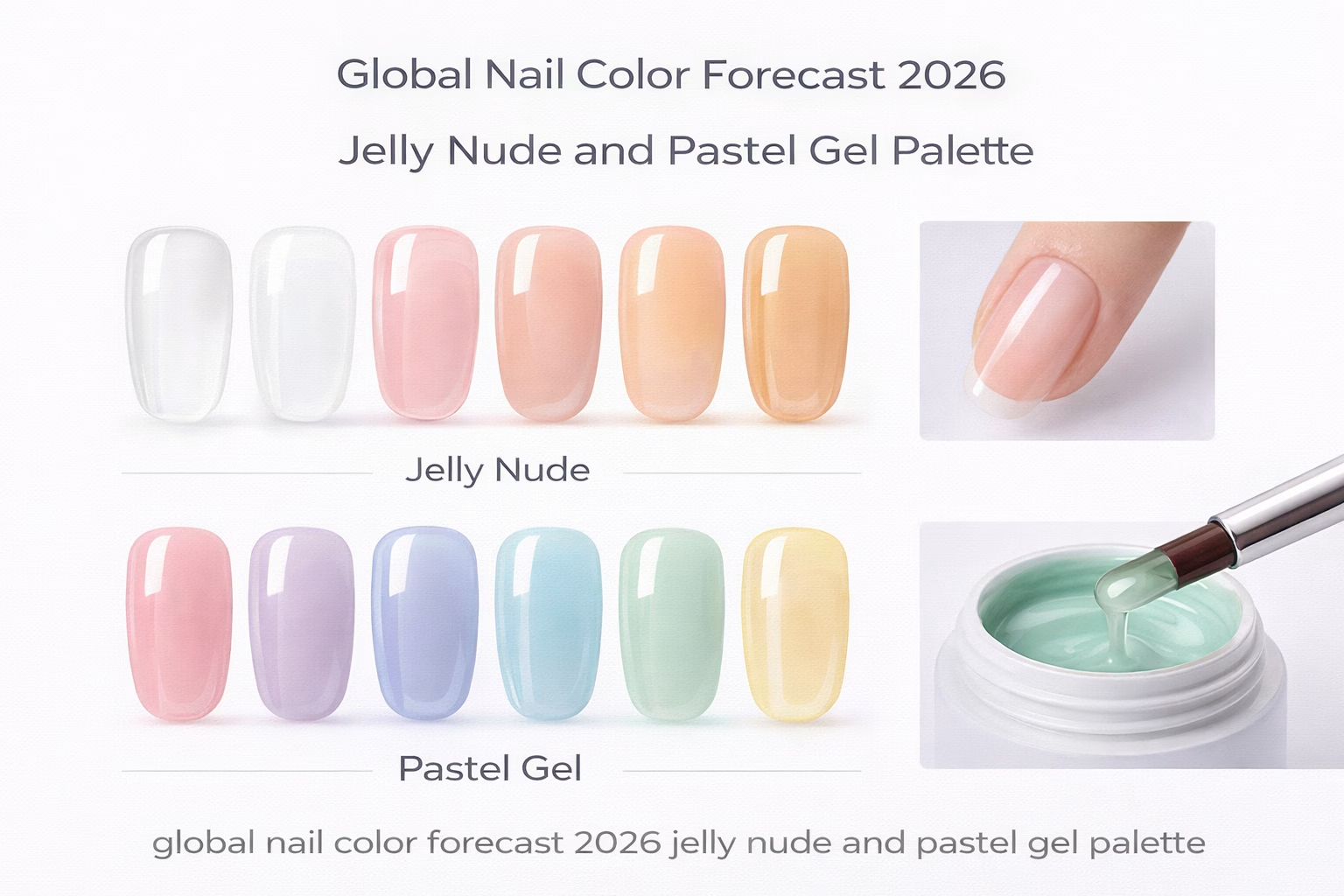
4.2 Jelly, Sheer, and Translucent Color Systems
Transition from Trend to Core Category
Jelly and sheer gel systems entered the US market as seasonal aesthetics influenced by East Asian trends.
Between 2022 and 2024, social media exposure accelerated adoption. By 2025, these systems had become permanent components of professional catalogs.
Functional Advantages
Translucent systems provide:
- Natural-looking coverage
- Visual nail-bed correction
- Layering compatibility
- Design flexibility
These properties enable technicians to serve multiple aesthetic demands with fewer SKUs.
Shade Architecture
Successful brands structure jelly portfolios around:
- Neutral nudes
- Soft pinks
- Milky whites
- Tea and caramel tones
- Cool pastels
This architecture simplifies inventory management.
2026 Outlook
By 2026, sheer systems are projected to account for approximately 20–25% of color gel sales in professional channels.
Growth will be driven by minimalist aesthetics and “clean beauty” positioning.
4.3 Cat Eye, Chrome, and Optical Effect Gels
Content-Driven Demand
Cat eye and chrome systems function as “content amplifiers” in the digital ecosystem.
They generate high engagement on social platforms and serve as traffic drivers for salons and brands.
Commercial Role
While these products rarely dominate reorder volumes, they play critical roles in:
- Attracting new clients
- Supporting seasonal campaigns
- Enhancing brand visibility
Inventory Characteristics
These SKUs exhibit:
- Higher volatility
- Seasonal peaks
- Lower baseline turnover
2026 Outlook
Optical effect gels will maintain stable demand but will remain secondary revenue drivers.
Brands should position them as marketing assets rather than core profit centers.
4.4 Solid, Putty, and Hybrid Extension Systems
Efficiency-Oriented Growth
Solid and putty-style extension systems address key operational constraints:
- Reduced sculpting time
- Improved structural consistency
- Lower skill dependency
These products appeal particularly to high-volume salons and training institutions.
Integration with BIAB Platforms
Hybrid systems combining BIAB foundations and solid extensions are becoming standard in advanced workflows.
2026 Outlook
Solid and hybrid extension products are expected to grow at moderate rates (6–8% annually), driven by service optimization trends.
4.5 Category-Level Risk Factors
Despite strong growth, each segment faces risks.
| Category | Primary Risk |
|---|---|
| BIAB | Batch inconsistency |
| Jelly | Color instability |
| Cat Eye | Demand volatility |
| Solid | Application learning curve |
Manufacturers that fail to address these risks will face rapid reputation erosion.
5 — Ingredient, Compliance, and Regulatory Forces Reshaping the Market
5.1 The Rising Impact of European Regulation
Although the US market is less regulated than the EU, European chemical policies increasingly shape global formulations.
Restrictions on specific photoinitiators, solvents, and sensitizing agents have forced suppliers to redesign core systems.
These changes propagate globally through shared supply chains.
5.2 The Expansion of HEMA-Free and Low-Allergen Systems
Since 2022, demand for HEMA-free products has grown rapidly.
Drivers include:
- Increased consumer awareness
- Influencer advocacy
- Salon liability concerns
- Insurance requirements
By 2025, many major US distributors required HEMA-free alternatives in their catalogs.
Technical Challenges
Developing stable low-allergen systems requires:
- Alternative monomer systems
- Enhanced adhesion promoters
- Modified curing profiles
This raises R&D costs and barriers to entry.
5.3 Transparency and Documentation Requirements
Buyers increasingly demand:
- Full INCI lists
- Safety data sheets
- Stability testing
- Compliance declarations
Documentation quality has become a competitive differentiator.
Suppliers without robust regulatory infrastructure face declining trust.
5.4 Environmental and Sustainability Pressure
Although not yet mandatory in the US, sustainability expectations are rising.
Retailers and distributors increasingly prefer:
- Recyclable bottles
- Reduced packaging volume
- Water-based auxiliary products
- Lower VOC content
By 2026, sustainability will function as a secondary qualification factor.
5.5 Cost Implications of Compliance
Compliance-driven reformulation increases:
- Raw material costs
- Testing expenses
- Certification fees
- Development timelines
These pressures favor large, technically capable manufacturers.
Smaller suppliers may struggle to maintain margins.
5.6 2026 Regulatory Outlook
By 2026, the US market is expected to exhibit:
- Wider adoption of low-sensitization systems
- More standardized documentation
- Increased distributor vetting
- Higher entry thresholds
Regulatory competence will become a core competitive capability.
6 — Channel Structure and Pricing Dynamics in the US Market
By 2026, growth in the US gel polish market will be shaped not only by product innovation, but by fundamental changes in how products are distributed, priced, and positioned.
Three primary channels dominate the market:
- Direct-to-Consumer (DTC & social commerce)
- Distributor / wholesale networks
- Professional salon and training institutions
Each channel requires a distinct product and pricing strategy.
6.1 Direct-to-Consumer (DTC and Social Commerce)
Expansion of Digital-First Nail Brands
Since 2021, the US market has seen rapid growth in digital-native nail brands operating through:
- Independent websites
- Amazon and marketplace platforms
- TikTok Shop and social storefronts
- Influencer partnerships
These brands emphasize:
- Visual storytelling
- Fast product iteration
- Limited-edition releases
- Strong packaging aesthetics
Pricing Characteristics
Typical DTC price ranges in 2025:
| Тип продукта | Average Retail Price |
|---|---|
| BIAB / Builder | USD 18–35 |
| Color Gel | USD 12–25 |
| Top/Base | USD 10–22 |
Margins are high, but marketing costs are substantial.
Customer acquisition costs often exceed 25–35% of revenue.
2026 Outlook
DTC will remain a major growth engine, but competition will intensify.
Successful brands will need:
- Strong product differentiation
- Repeat-purchase systems
- Subscription or bundle models
- Superior customer support
Without system-level design, DTC brands will struggle to sustain profitability.

6.2 Distributor and Wholesale Channels
Structural Stability
Despite digital growth, distributor networks remain the backbone of professional nail supply in the US.
They provide:
- Nationwide logistics
- Credit facilities
- Technical support
- Training infrastructure
Large distributors continue to dominate salon procurement.
Purchasing Logic
Distributors prioritize:
- Product stability
- Consistent supply
- Low return rates
- Regulatory compliance
- Scalable SKUs
Trend-driven products are evaluated cautiously.
Pricing Characteristics
Wholesale pricing typically represents:
- 40–60% of retail price
- Volume-based discount structures
- Long-term supply agreements
Margins are thinner than DTC, but volumes are larger.
2026 Outlook
Distributors will increasingly favor:
- System-based suppliers
- Modular product platforms
- Exclusive regional agreements
Suppliers lacking scale or documentation will face exclusion.
6.3 Professional Salons and Training Institutions
Central Role in Brand Formation
Salons and academies function as:
- Product testing environments
- Brand endorsement platforms
- Skill dissemination hubs
Products adopted by major academies often achieve national recognition.
Purchasing Behavior
Salons focus on:
- Performance reliability
- Service efficiency
- Client satisfaction
- Cost per service
Price sensitivity is lower than in retail channels.
2026 Outlook
Salon chains and education networks will play growing roles in system standardization.
Brands aligned with training programs will gain structural advantages.
6.4 Hybrid Channel Models
By 2025, many successful brands operated across multiple channels.
Typical hybrid structures include:
- DTC + distributor
- Salon + education + retail
- Influencer + wholesale
Hybrid models improve resilience but increase operational complexity.
Effective coordination becomes critical.
6.5 Evolution of Pricing Logic
From Unit Pricing to System Pricing
Earlier market phases emphasized single-SKU pricing.
By 2026, pricing is shifting toward:
- Service kits
- Starter systems
- Professional bundles
- Subscription packages
This increases average order value and retention.
Value-Based Pricing
High-performing brands price based on:
- Service outcomes
- Durability
- Technical support
- Brand credibility
Not simply production cost.
6.6 Margin Pressure and Cost Management
Key cost drivers include:
- Raw material volatility
- Compliance expenses
- Packaging upgrades
- Logistics inflation
To maintain margins, brands increasingly rely on:
- Modular platforms
- Long-term supplier contracts
- SKU rationalization
- Process automation
7 — OEM and Branding Strategy: From Market Insight to Execution
As the US market matures, competitive advantage is shifting from surface-level differentiation to operational depth.
By 2026, successful brands will be distinguished by their ability to translate market insight into scalable systems.
7.1 The End of Transactional Manufacturing
Traditional OEM relationships focused on:
- Unit price
- MOQ
- Время выполнения
This model is losing relevance.
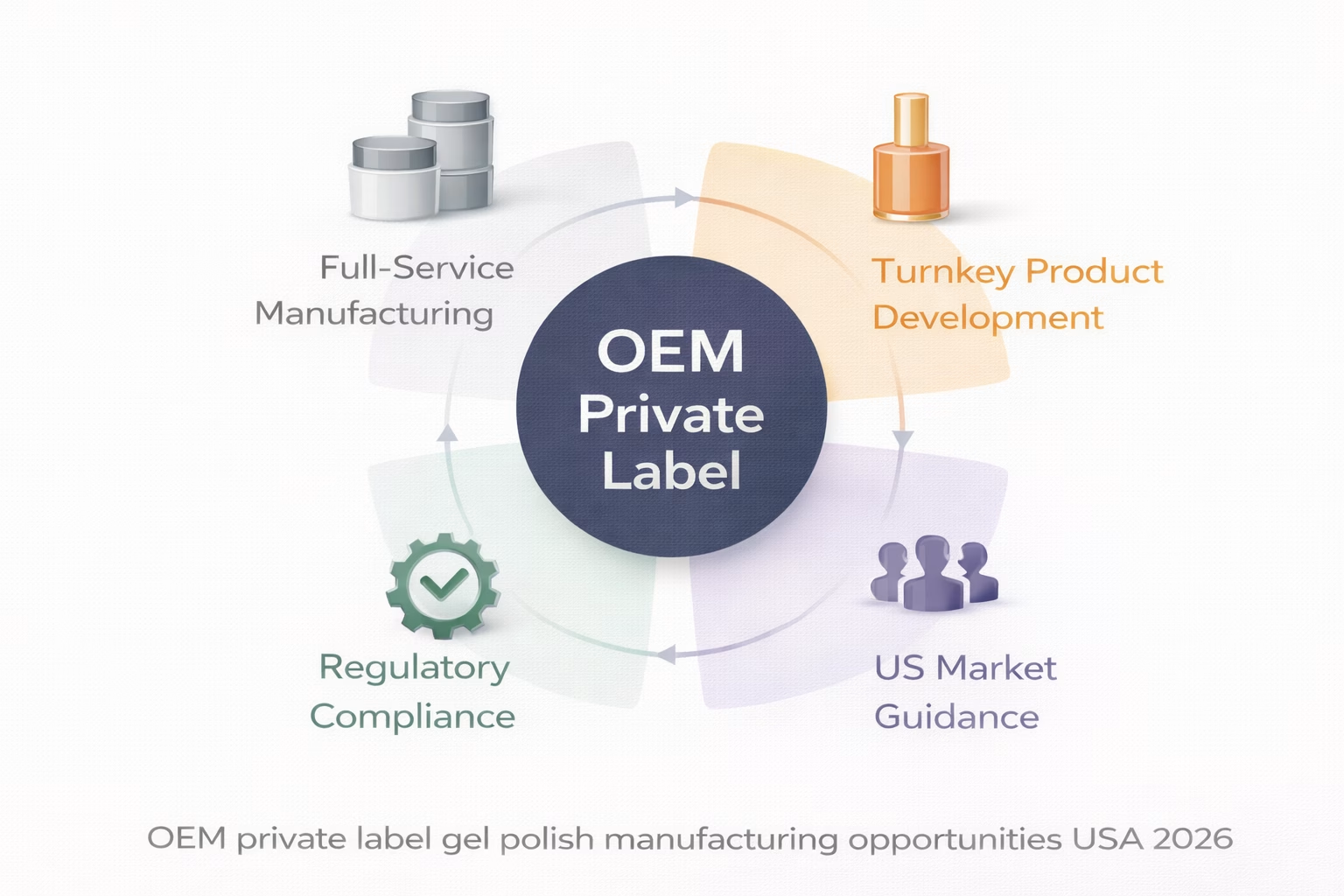
Buyers now expect partners who provide:
- Formulation consultation
- Stability testing
- Packaging engineering
- Compliance support
- Market feedback
OEM suppliers are becoming strategic assets.
7.2 System-Oriented Product Development
Leading manufacturers design products as interconnected modules.
Example architecture:
| Module | Function |
|---|---|
| Adhesion | Bonding and primers |
| Structure | BIAB / builders |
| Color | Pigment families |
| Finish | Top systems |
| Упаковка | Bottle platforms |
This modularity enables rapid customization.
7.3 Minimum Viable System (MVS) for 2026 Launches
Instead of launching dozens of SKUs, successful brands increasingly start with a Minimum Viable System.
Typical MVS structure:
- 1–2 BIAB / builder bases
- 6–12 core jelly/nude colors
- 1 universal top coat
- 1 rubber base
- 1 extension system
This reduces operational risk.
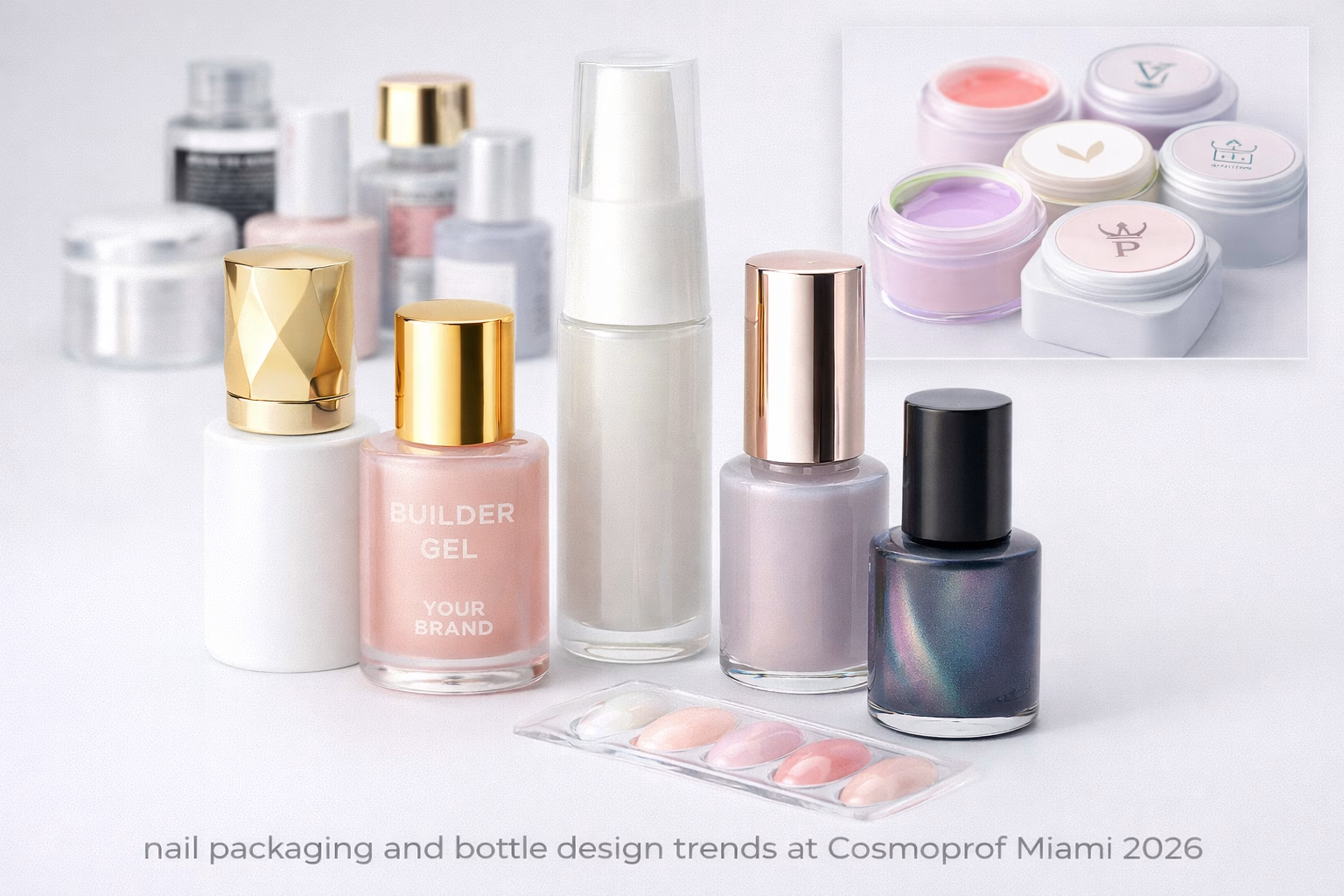
7.4 Packaging as Brand Infrastructure
Packaging now functions as long-term infrastructure.
Key priorities include:
- Recognizable silhouettes
- Durable printing
- Consistent finishes
- Scalable materials
Frequent redesigns undermine credibility.
7.5 Data-Driven Product Iteration
By 2026, advanced brands will rely on:
- Sales velocity analysis
- Return-rate monitoring
- Shade performance tracking
- User feedback systems
This enables continuous optimization.
7.6 Risk Management and Supply Chain Resilience
Major risks include:
- Raw material shortages
- Regulatory shocks
- Logistics disruptions
- Quality drift
Mitigation strategies:
- Dual sourcing
- Buffer inventory
- Shared testing protocols
- Transparent communication
7.7 Building Long-Term Brand Equity
Sustainable brands focus on:
- Technical credibility
- Educational content
- Community engagement
- Consistent positioning
Short-term trend chasing undermines long-term value.
8 — 2026 Forecast Scenarios, Risk Assessment, and Strategic Conclusion
As the US gel polish market enters 2026, growth prospects remain positive, but increasingly dependent on structural execution rather than short-term momentum. The next phase of expansion will be defined by how effectively brands, distributors, and manufacturers respond to operational complexity, regulatory evolution, and changing buyer expectations.
Rather than assuming a single linear future, market development is best understood through scenario-based analysis.
8.1 2026 Market Forecast Scenarios
Based on historical performance, category dynamics, regulatory signals, and channel behavior, three primary scenarios are projected for the US gel polish market in 2026.
Baseline Scenario: Sustained Structural Growth (Most Likely)
Projected Growth: 6.0%–7.2% CAGR
Market Characteristics:
- Continued expansion of BIAB and structured systems
- Stable distributor consolidation
- Moderate DTC competition
- Gradual compliance adaptation
Key Drivers:
- Professional service demand
- System-based purchasing
- Packaging differentiation
- Training-based adoption
Implication:
This scenario favors technically capable brands with modular product platforms and stable OEM partnerships.
Optimistic Scenario: Platform-Driven Acceleration
Projected Growth: 8.0%+ CAGR
Market Characteristics:
- Rapid influencer-to-retail conversion
- Strong DTC and subscription adoption
- High-performing system brands dominate
- Successful compliance transitions
Key Drivers:
- Social commerce scale
- Strong ecosystem branding
- Efficient fulfillment networks
Implication:
Brands with advanced digital infrastructure and vertically integrated supply chains outperform peers.
Conservative Scenario: Regulatory and Cost Pressure
Projected Growth: 4.5%–5.5% CAGR
Market Characteristics:
- Raw material price volatility
- Delayed reformulation cycles
- Distributor tightening
- Consumer spending slowdown
Key Drivers:
- Compliance costs
- Logistics instability
- Margin compression
Implication:
Only financially and technically resilient suppliers maintain profitability.
Scenario Summary
| Scenario | Growth Rate | Primary Opportunity | Main Risk |
|---|---|---|---|
| Baseline | 6.0–7.2% | System platforms | Execution complexity |
| Optimistic | 8.0%+ | Digital scale | Market saturation |
| Conservative | 4.5–5.5% | Efficiency leadership | Cost inflation |
8.2 Structural Risks Facing the Industry
Despite favorable long-term prospects, several structural risks require continuous management.
1. Quality Drift Risk
As brands scale rapidly, batch inconsistency and formula deviation become major threats.
Consequences include:
- Increased return rates
- Distributor disputes
- Reputation damage
Mitigation requires standardized testing and traceability systems.
2. Compliance Disruption Risk
Regulatory changes can render existing SKUs non-compliant.
Common impacts:
- Emergency reformulation
- Delayed shipments
- Inventory write-offs
Proactive monitoring and early testing are essential.
3. Channel Dependency Risk
Over-reliance on a single channel increases vulnerability.
Examples:
- DTC algorithm changes
- Distributor consolidation
- Platform fee increases
Diversification improves resilience.
4. Supply Chain Concentration Risk
Single-source dependencies expose brands to geopolitical and logistical shocks.
Dual sourcing and regional redundancy reduce exposure.
5. Brand Dilution Risk
Excessive SKU expansion without system logic weakens positioning.
This leads to:
- Inventory inefficiency
- Marketing fragmentation
- Customer confusion
Portfolio discipline is increasingly critical.
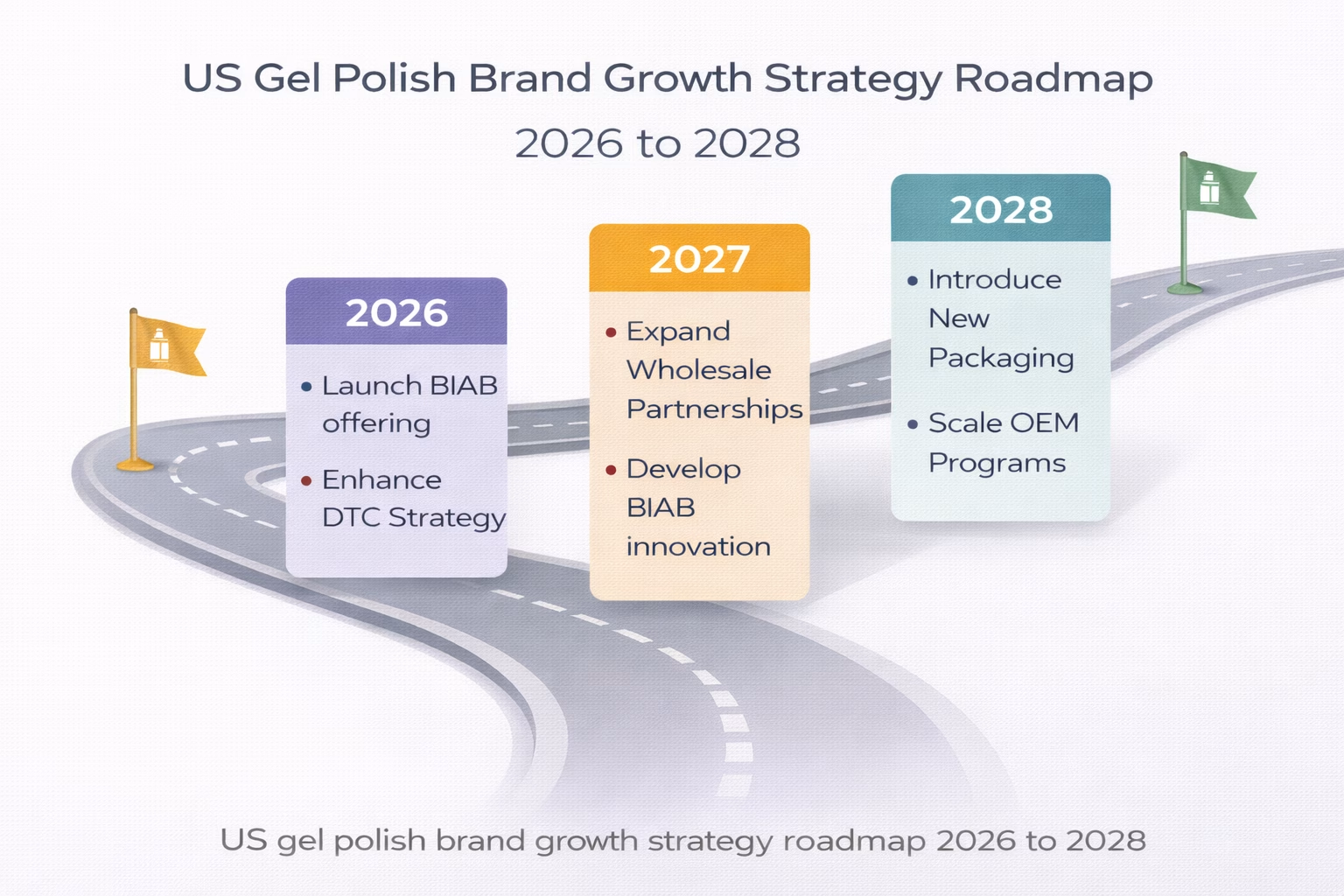
8.3 Strategic Action Checklist for 2026
Based on observed market patterns, the following actions are recommended for brands and suppliers targeting sustainable growth.
Product Strategy
- Build modular systems rather than isolated SKUs
- Prioritize BIAB and structural platforms
- Establish permanent jelly and nude collections
- Limit experimental SKUs to controlled pilots
Technical Infrastructure
- Standardize stability and aging testing
- Maintain updated compliance documentation
- Implement batch-level traceability
- Optimize curing compatibility protocols
Branding and Packaging
- Develop long-term bottle and label systems
- Minimize frequent redesign cycles
- Invest in tactile and finish differentiation
Channel Management
- Balance DTC, wholesale, and salon exposure
- Design channel-specific bundles
- Support distributor training programs
Supply Chain and OEM Collaboration
- Formalize co-development workflows
- Secure secondary sourcing options
- Align production planning with forecast models
Organizational Capability
- Build internal regulatory expertise
- Integrate customer feedback loops
- Maintain long-term innovation pipelines
8.4 Long-Term Market Implications (Beyond 2026)
While this report focuses on 2026, several longer-term trajectories are already visible.
These include:
- Increased automation in manufacturing
- AI-assisted shade development
- Data-driven inventory planning
- Personalized nail systems
- Subscription-based professional supply models
Brands that begin building these capabilities early will benefit from structural advantages in the late 2020s.
8.5 Strategic Conclusion: From Growth to Governance
The evolution of the US gel polish market reflects a broader transformation within the global beauty industry.
The early growth phase was driven by:
- Trend imitation
- Price competition
- Rapid SKU expansion
The emerging phase will be defined by:
- System governance
- Technical reliability
- Operational discipline
- Partnership ecosystems
By 2026, competitive advantage will no longer be determined by who launches first, but by who executes best.
Final Reflection
The US gel polish market remains one of the most dynamic segments in global beauty. Its continued growth is supported by strong consumer engagement, professional adoption, and technological innovation.
However, future success will depend less on trend responsiveness and more on structural capability.
Brands and manufacturers that treat product development, compliance, packaging, and supply chain management as integrated systems will shape the next decade of industry leadership.
Those that rely on short-term momentum will struggle to maintain relevance.
In this sense, 2026 represents not merely another growth year—but a strategic inflection point.
FAQ Schema (paste into Rank Math FAQ block)
Q1: What is driving the US gel polish market in 2026?
A: The strongest drivers are BIAB adoption, demand for durable salon systems, minimalist jelly/nude aesthetics, and channel growth through DTC and wholesale distribution.
Q2: Is BIAB still growing in 2026?
A: Yes. BIAB is shifting from a premium add-on to a foundational service layer, especially for overlays, structured manicures, and short extensions.
Q3: Are jelly and sheer gels a short-term trend?
A: In the US market, sheer systems are becoming permanent catalog essentials because they support layering, natural looks, and efficient salon inventory planning.
Q4: What compliance changes affect gel polish in 2026?
A: Ingredient transparency and low-sensitization positioning (such as HEMA-free systems) are increasingly expected by distributors and professional buyers.
Q5: Which channel is best for launching a gel polish brand in the US?
A: Many brands succeed through hybrid channel models—DTC for storytelling and margin, and distributors/salons for scale and repeat purchasing.
Q6: What should a private label gel polish starter system include in 2026?
A: A minimum viable system typically includes BIAB or builder gel, a core jelly/nude palette, a reliable top coat, base/rubber base support, and a clear expansion plan.
Q7: How do OEM partners help brands scale in 2026?
A: Strong OEM partners provide batch consistency, documentation, compliance support, packaging engineering, and modular product architecture to reduce scaling risk.