
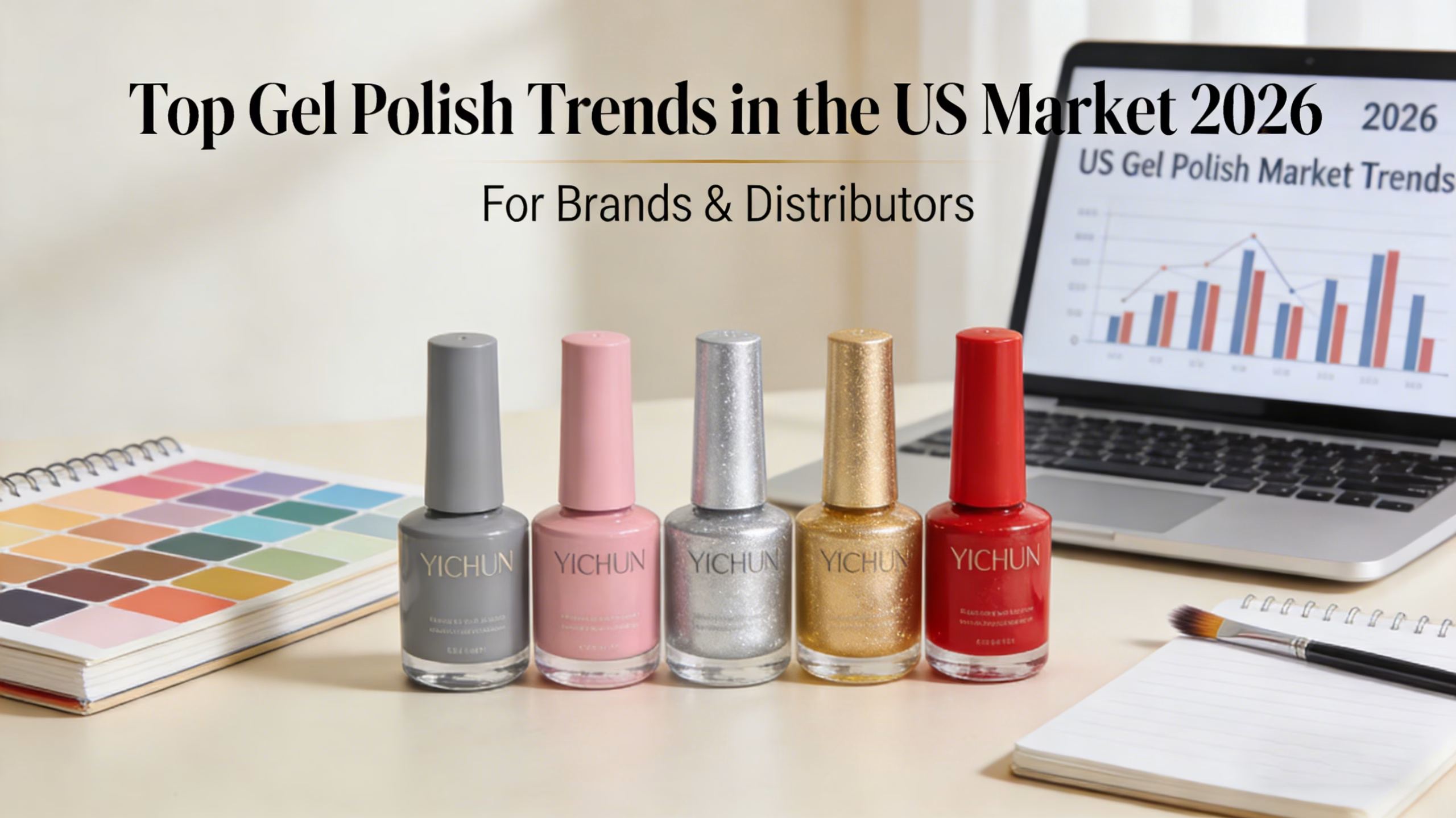
Top Gel Polish Trends in the US Market 2026 are reshaping how brands, distributors, and salons approach product development, sales, and long-term profitability. The U.S. gel polish industry in 2026 has entered a highly mature, data-driven, and commercially focused phase.
What was once a market driven by viral TikTok shades, impulse launches, and flash-in-the-pan aesthetics has shifted dramatically. Today, professional nail brands, wholesale distributors, salon chain buyers, and direct-to-consumer retailers are no longer chasing trends purely for visual appeal or social media attention. They are evaluating every trend, formula, shade, and collection through a strict business lens: durability, repeat purchase rate, application consistency, shelf efficiency, cross-channel performance, inventory stability, and long-term profitability.
In short, 2026 U.S. gel polish decision-makers do not want trends that only look good. They want trends that sell consistently, perform reliably, reduce returns, lower technician frustration, and build loyal customer bases.
This shift is irreversible. For private-label brands, OEM manufacturers, importers, and distributors hoping to succeed in the U.S. market, understanding surface-level color trends is no longer enough. You must understand the commercial logic behind trends—what brands actually care about, what makes distributors accept a new line, what reduces risk, what increases turnover, and what separates a short-lived fad from a category-defining movement.
This comprehensive report breaks down the top gel polish trends dominating the U.S. market in 2026, focusing specifically on what brands and distributors are actively monitoring, why each trend carries real business value, key product features required to meet buyer expectations, and how to implement these trends without sacrificing operational stability or profit margins. Every section is based on actual buyer feedback, distributor surveys, salon chain requirements, and retail performance data from the North American nail industry.
For a deeper dive into the core buyer priorities that shape these 2026 trends, explore our complete guide to what U.S. buyers want in gel polish in 2026.
Trend 1: Formula Consistency & Professional Performance – The Non-Negotiable Base of All Trends
Across every U.S. buyer interview and distributor requirement document reviewed in 2026, one point appears universally: no trend matters if the formula fails.
Gone are the years when a unique shade or trendy finish could overcome poor application, streaky pigment, uneven curing, or inconsistent viscosity. U.S. salon professionals and retail consumers have extremely high standards for gel polish usability, and brands now face immediate backlash—including negative reviews, chargebacks, returned inventory, and terminated partnerships—if formulas do not meet professional-grade expectations.
What Brands and Distributors Are Actively Watching:
- Self-leveling viscosity that requires minimal brushing effort and eliminates streaks
- Consistent pigment density across every shade in a collection (no watery or thick-only outliers)
- Reliable curing under standard LED (30–60s) and UV lamps, with no under-curing, heat spikes, or burning sensations
- Full coverage in 1–2 coats for nearly all shades, including sheers, milks, and dark crèmes
- No shrinkage, no pulling, no bubbling, and no patchiness during application
- Formula stability that remains consistent across production batches (critical for distributors and repeat orders)
- Compatibility with base coats, top coats, and nail prep products used in mainstream U.S. salons
Why This Trend Is Commercially Critical:
Formula inconsistency directly destroys profitability. Distributors report that lines with problematic formulas see 200–300% higher return rates, lower reorder frequency, and negative word-of-mouth that ruins long-term market positioning. Salon owners avoid products that increase service time, frustrate technicians, or lead to client complaints. For retail DTC customers, poor application leads to one-time purchases instead of loyal, repeat buyers.
In 2026, U.S. decision-makers view performance as part of the trend itself, not an afterthought. A trend shade cannot be considered “on-trend” if it does not perform like a professional product.
Our professional gel polish collection is engineered to meet these strict 2026 performance standards, with self-leveling viscosity, consistent LED/UV curing, and 21+ day chip resistance tailored for U.S. salon and retail markets.
Trend 2: Extreme Long-Wear & Chip-Resistance – Durability as a Trend Differentiator
Long-lasting wear has always been a selling point for gel polish, but in 2026, it has evolved into a core trend metric that separates premium brands from low-quality competitors. U.S. buyers no longer accept “average” wear time. They demand engineered durability that supports real daily life.
Consumers in the U.S. market actively use gel polish for busy lifestyles: office work, cooking, parenting, gardening, healthcare jobs, and constant hand washing. As a result, durability is no longer optional—it defines whether a trend line will survive beyond its launch month.
What Brands and Distributors Are Actively Watching:
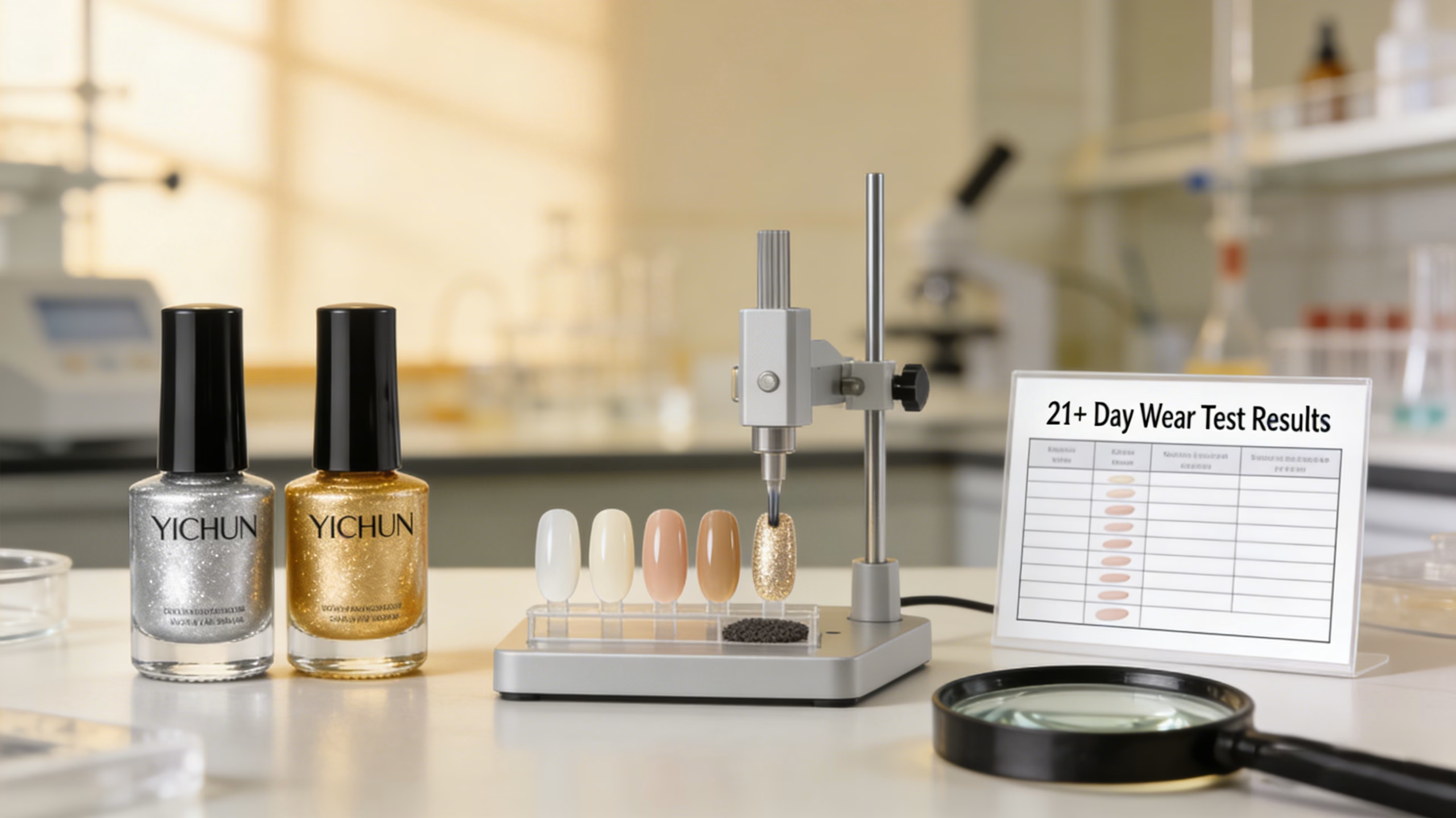
- Minimum 21+ day wear without lifting, chipping, peeling, or edge breakdown
- High gloss retention that does not fade, dull, or matte prematurely
- Stain resistance for dark crèmes, bold neons, and deeply pigmented shades
- Anti-lift formula technology that adheres well to natural nails, even with minimal prep
- Resistance to household chemicals, hand sanitizer, and frequent water exposure
- No brittleness, cracking, or peeling after two weeks of wear
- Consistent durability across finishes: crème, jelly, sheer, chrome, and velvet
Why This Trend Is Commercially Critical:
Distributors and salon chains track client retention rate tied to gel polish wear. Products that chip or lift within 7–10 days lead to client dissatisfaction, fewer return salon visits, and negative social reviews. U.S. consumers openly share poor wear experiences on Instagram, TikTok, and Facebook Groups, which can destroy a brand’s reputation overnight.
Brands that deliver true long-wear performance see 40–60% higher repurchase rates according to 2026 North American nail industry data. For distributors, durability equals fewer complaints, less inventory waste, and stronger long-term partnerships with retailers. Durability is no longer a bonus—it is a mandatory trend requirement.
Trend 3: Clean, Non-Toxic & Ethical Formulations – Non-Negotiable for Mainstream U.S. Distribution
In 2026, clean beauty is no longer a niche marketing trend reserved for eco-focused brands—it has become a basic requirement for any gel polish line aiming for nationwide U.S. distribution. Major retail buyers, salon chains, and wholesale distributors now include clean ingredient standards in their mandatory vendor guidelines, and products that fail to meet these benchmarks are often rejected before negotiation even begins.
U.S. consumers, especially millennial and Gen-Z buyers, actively research ingredient lists, cruelty-free status, and toxin-free certifications. They are willing to pay premium prices for clean formulas, and they avoid brands that do not align with their ethical values. For distributors, clean certification expands market reach, improves brand image, and opens doors to major retail partnerships.
What Brands and Distributors Are Actively Watching:
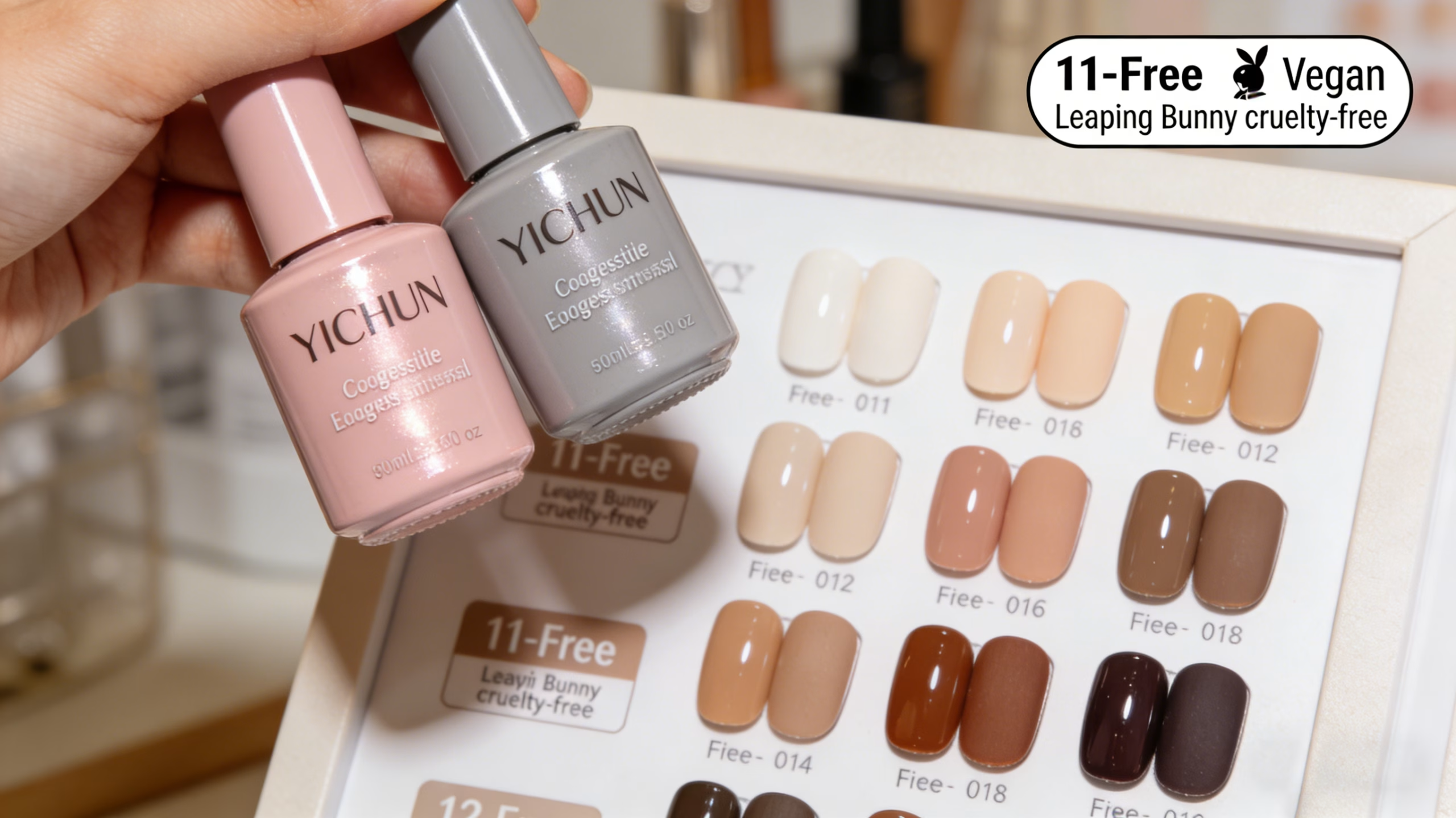
- 9-Free, 11-Free, and 15-Free toxin-free formulations (free from formaldehyde, dibutyl phthalate, toluene, camphor, and other harmful chemicals)
- Vegan formulas with zero animal-derived ingredients
- Cruelty-free certification (Leaping Bunny, PETA, or equivalent third-party verification)
- Low-odor and low-fume formulas ideal for salon environments and home use
- Sustainable packaging options: recyclable glass, reduced plastic, biodegradable caps, and minimal packaging waste
- Transparent sourcing and production practices that appeal to ethically focused consumers
- No harsh additives that cause sensitivity, drying, or nail damage over time
Why This Trend Is Commercially Critical:
Data from U.S. beauty retail reports in 2026 shows that clean beauty gel polish lines outsell conventional lines by nearly 35% in retail channels. Distributors report that clean-certified products have higher shelf turnover, fewer consumer complaints, and stronger long-term brand loyalty.
Salon chains also prioritize low-odor, non-toxic formulas to improve technician working conditions and meet indoor air quality standards. For brands, clean certification is no longer optional—it is a gatekeeper trend that determines access to large-scale U.S. distribution. Without clean credentials, even the most visually stunning collections will struggle to reach mainstream buyers.
Trend 4: Inclusive Shade Ranges for All Skin Tones – The Top Demand from Salon Buyers
Skin-tone inclusivity has evolved from a social movement into the single most important color trend strategy in the 2026 U.S. gel polish market. U.S. salons serve an extremely diverse customer base, and buyers now reject collections that only cater to fair skin tones. Inclusivity is not just a social choice—it is a direct sales driver.
Distributors and salon owners report that inclusive nude, neutral, and pink collections consistently outperform limited-tone ranges because they appeal to every client, regardless of ethnicity or skin depth. A truly inclusive line reduces lost sales, improves client satisfaction, and becomes a staple in every salon’s service menu.
What Brands and Distributors Are Actively Watching:
- Nude and neutral collections with 6–12 shades covering fair, light, medium, tan, deep, and rich dark skin tones
- Cool-toned, warm-toned, and neutral-toned options to match different undertones
- Milky whites, soft blushes, and sheer bases that flatter without looking ashy or washed out
- Bold color shades that pop equally on light and dark nails
- Avoidance of “one-shade-fits-all” nudes that fail on deeper skin tones
- Color-coded labeling or marketing that clearly highlights inclusivity
- Consistent formula quality across every inclusive shade (no weak pigmentation in deeper neutrals)
Why This Trend Is Commercially Critical:
Inclusive shade ranges increase total addressable market size by over 50% for nail brands. Salon chains report that clients actively request brands with diverse nude options, and many salons now prioritize inclusive lines when updating their product shelves.
Distributors benefit from lower return rates because inclusive shades have broader universal appeal. In 2026, a gel polish line without intentional skin-tone inclusivity is seen as outdated, limited, and commercially short-sighted. Inclusivity is not just a trend—it is a core business strategy.
Trend 5: Next-Generation Finishes – Beyond Basic Crème and Gloss
While crème and sheer finishes remain foundational, 2026 U.S. buyers are heavily focused on premium, Instagrammable, multi-dimensional finishes that create social media content, drive impulse purchases, and differentiate brands from generic competitors. These innovative finishes are not just visual—they are designed for real salon application, not just photo opportunities.
Today’s top finishes balance visual drama with professional usability. Distributors avoid overly complicated finishes that require advanced skill, special tools, or excessive curing time. The most successful trends are visually impressive و technician-friendly.
What Brands and Distributors Are Actively Watching:
- Glazed Donut / Glass Gel: High-clarity, ultra-gloss, glass-like finish with extreme shine
- Velvet & Matte Velvet: Soft, velvety matte without chalky texture or fading
- Jelly Gel: Translucent, dewy, see-through pigment that layers beautifully
- Chrome & Mirror Finishes: Stable, easy-to-apply chrome without powder mess
- Aurora & Unicorn Chrome: Iridescent, color-shifting effects for social media appeal
- Metallic Satin: Smooth, low-shine metallic with elegant, modern appeal
- Thermal & Color-Changing: Stable temperature-activated color shift (no unreliable formulas)
- Glow-in-the-Dark: Safe, non-toxic glow formulas for creative and festival nail art
Why This Trend Is Commercially Critical:
Unique finishes drive social media virality, higher pricing power, and impulse buys. U.S. consumers love sharing creative nail looks on TikTok, Instagram, and Pinterest, and special finishes generate organic brand exposure.
For salons, innovative finishes allow for premium service pricing (nail art, special finishes, custom looks). For distributors, finish-driven collections have higher perceived value and better profit margins. In 2026, modern gel polish lines cannot survive on basic crèmes alone—strategic finish trends are essential for staying competitive.
Trend 6: Shelf & Merchandising Intelligence – Beyond Pretty Packaging
In 2026, U.S. brands and distributors have completely redefined “shelf appeal.” It is no longer enough for gel polish packaging to be visually attractive—packaging and merchandising must serve a commercial purpose: reducing inventory complexity, simplifying purchasing decisions, telling a clear trend story, and driving faster sell-through.
Distributors and retail buyers reject collections that look beautiful but are difficult to merchandise, organize, or explain to customers. The most successful trend lines are designed with “shelf logic” in mind—making it easy for salon owners, retail staff, and consumers to understand the trend, identify key shades, and make quick purchases.
What Brands and Distributors Are Actively Watching:
- Modular Packaging Systems: Collections designed to group trend shades with core essentials (base coat, top coat, prep products) for easy cross-selling and shelf organization
- Clear Hero SKU Identification: 1–2 standout shades per trend collection (marked with special packaging or labeling) to guide buyer attention and reduce decision fatigue
- Trend Narrative Packaging: Labels, boxes, and displays that clearly communicate the trend theme (e.g., “Glazed Glass Collection,” “Inclusive Nude Edit”) without cluttered messaging
- Shelf-Scannable Design: Bold, consistent branding and color-coding that allows buyers to quickly identify trend types (seasonal, core, effect) from a distance
- Compact Trend Kits: Pre-assembled kits (3–6 shades) that reduce inventory bloat for distributors and make it easy for salons/retailers to test new trends with low risk
- Space-Efficient Packaging: Slim, stackable bottles that maximize shelf space (critical for retail stores and salon backbars)
- Informational Labeling: Clear indicators of formula benefits (e.g., “11-Free,” “21-Day Wear,” “Self-Leveling”) to reinforce trend value at a glance
Why This Trend Is Commercially Critical:
Poor merchandising design leads to 30–40% slower sell-through rates, according to 2026 U.S. beauty retail data. Distributors report that collections with confusing packaging or no clear trend narrative require more marketing support, more staff training, and result in higher inventory holding costs.
Salon owners and retail buyers prioritize products that are easy to display, explain, and sell. For brands, merchandising intelligence turns trend collections into “self-selling” products—reducing the burden on distributors and retailers to drive awareness. In 2026, packaging is not just decoration—it is a commercial tool that directly impacts profitability.

Trend 7: Core + Seasonal Trend Balance – Stability Without Stagnation
U.S. brands and distributors have learned a critical lesson from past market failures: trend lines that are either overly fad-driven (all seasonal, no core) or overly static (all core, no novelty) fail to sustain long-term growth. The 2026 trend strategy is defined by a balanced mix of timeless core shades and curated seasonal trends—a structure that drives consistent reorders while keeping the line fresh and relevant.
This balance solves a major pain point for distributors: avoiding inventory waste from short-lived fads while preventing stagnation from outdated core lines. For brands, it builds customer loyalty by offering both reliability and novelty.
What Brands and Distributors Are Actively Watching:
- 70/30 Core-to-Trend Ratio: 70% core staples (nudes, milks, soft taupes, classic reds) that drive consistent reorders and form the “backbone” of the line; 30% seasonal/effect trends that add novelty without disrupting stability
- Core Trend Staples: Shades that remain relevant year-round, perform well across channels, and appeal to a broad customer base (no seasonal obsolescence)
- Curated Seasonal Drops: 2–3 small seasonal trend collections per year (6–12 shades each) that align with U.S. seasonal aesthetics (e.g., summer neons, fall terracottas, winter metallics)
- Trend Compatibility: Seasonal shades that complement (not compete with) existing core bestsellers (e.g., a seasonal chrome shade that pairs with core nude base coats)
- Low-Risk Experimental Trends: Limited-run effect shades (1–2 per season) to test future trend directions without overcommitting to inventory
- Permanent Trend Promotions: Seasonal shades that perform well are promoted to core status, reducing waste and building long-term value
Why This Trend Is Commercially Critical:
Data from U.S. wholesale distributors shows that lines with a 70/30 core-to-trend ratio have 50% lower inventory waste and 45% higher annual reorder rates compared to unbalanced lines. Core shades drive consistent cash flow, while seasonal trends generate buzz and attract new customers.
For salon chains, this balance ensures they always have reliable staples for everyday services while offering trendy options for clients seeking something new. For distributors, it reduces the risk of overstocking fads and ensures steady, predictable sales. In 2026, balance is the key to sustainable trend success.
Trend 8: Channel-Specific Trend Priorities – No More “One-Size-Fits-All”
The U.S. gel polish market is not a monolith—and 2026 brands and distributors are abandoning “one-size-fits-all” trend lines in favor of channel-aligned trends that meet the unique needs of salons, DTC/retail, and wholesale distributors. A trend that works for a high-end salon will not necessarily work for a drugstore retail chain, and vice versa.
This channel-specific focus reduces risk, improves sell-through, and strengthens partnerships between brands, distributors, and end-users. It ensures that every trend is tailored to the way customers shop and use gel polish in each channel.
What Brands and Distributors Are Watching by Channel:
Salon-Focused Trends (Professional & Chain Salons)
Salon decision-makers prioritize workhorse trends that save time, reduce complaints, and support premium service pricing:
- Fast-cure formulas (30–60s LED) to maximize technician productivity
- Low-maintenance shades that require minimal touch-ups and skill to apply
- Neutral and inclusive trend tones that flatter all clients (ideal for bridal, office, and everyday services)
- Durable formulas that reduce client follow-up fixes (e.g., lifting, chipping)
- Bulk packaging options (larger bottles) to reduce cost per service
- Compatibility with salon-grade prep and finish products
DTC & Retail Trends (Online, Drugstores, Beauty Retailers)
Direct-to-consumer and retail buyers prioritize visual and experiential trends that drive impulse buys and social media engagement:
- Instagrammable finishes (jelly, glazed, aurora chrome) that are easy to photograph and share
- Bold, memorable shade names and packaging that stand out on shelves and social feeds
- Mini trend kits (3–4 shades) for low-risk consumer trials
- Clear, consumer-friendly labeling (e.g., “Beginner-Friendly,” “21-Day Wear”)
- Clean, vegan, and cruelty-free credentials prominently displayed
- Limited-edition seasonal drops to create urgency and FOMO (fear of missing out)
Distributor-Focused Trends (Wholesale & Bulk Suppliers)
Wholesale distributors prioritize scalable, low-risk trends that simplify inventory management and reduce support burden:
- Trend lines with clear hierarchy (hero SKUs, core shades, seasonal add-ons) to avoid SKU bloat
- Cross-channel trend shades that work for both salons and retail (maximizing market reach)
- Consistent formula quality across all shades to reduce complaints and returns
- Modular packaging that makes it easy to mix and match core and trend SKUs
- Low-training requirements for formulas (no advanced skills needed for application)
Why This Trend Is Commercially Critical:
Channel-agnostic trend lines have 25–35% lower sell-through rates in the U.S. market, according to 2026 distributor surveys. Brands that fail to tailor trends to each channel waste inventory, frustrate partners, and miss out on niche opportunities.
For distributors, channel-aligned trends mean fewer returns, happier retail/salon partners, and more efficient inventory turnover. For brands, it builds trust and loyalty across the supply chain—turning trends into long-term commercial assets. In 2026, successful trend lines speak to each channel’s unique needs.
What Brands & Distributors Are Avoiding in 2026 – Trends That Become Liabilities
To fully understand the U.S. gel polish trend landscape in 2026, it’s just as critical to know what brands and distributors are rejecting as what they’re embracing. The market has little tolerance for trends that create risk, waste inventory, damage reputation, or increase operational burden. These are the red flags that immediately disqualify a trend line from mainstream U.S. distribution:
1. Overly Fussy, Technician-Dependent Formulas & Finishes
Brands and distributors avoid trends that require advanced skills, special tools, or excessive time to apply. This includes:
- Chrome or effect finishes that require multiple layers, complicated buffing, or special curing techniques
- Formulas that are too thin, too thick, or inconsistent (requiring constant adjustment by technicians)
- Shades that need 3+ coats for full coverage (increasing service time and product waste)
- Effect finishes that chip, fade, or peel within days if applied incorrectly
Why? Salon technicians are busy, and time is money. A trend that slows down services or increases frustration will be abandoned quickly. Distributors report that fussy formulas have 3x higher return rates and damage relationships with salon partners.
2. Trend Lines Without a Core Foundation
Collections that are 100% seasonal, with no core staples to drive consistent reorders, are universally rejected. This includes:
- “Fad-only” lines with no neutral, inclusive, or timeless shades
- Trend collections that do not complement existing core bestsellers
- Lines that require complete inventory replacement every season (wasting shelf space and capital)
Why? Distributors cannot afford to tie up inventory in trends that become obsolete in 3–6 months. Brands that lack a core foundation fail to build long-term customer loyalty and struggle to secure repeat orders.
3. Generic, Copycat Packaging & Branding
Packaging that copies top competitors, lacks a clear trend narrative, or fails to communicate value is a major red flag. This includes:
- Bottles, labels, or displays that are nearly identical to market leaders (no differentiation)
- Cluttered packaging with no clear indicators of formula benefits (e.g., no “11-Free” or “21-Day Wear” labeling)
- Trend collections with no cohesive theme or story (confusing buyers and consumers)
Why? In a crowded market, generic packaging fails to stand out on shelves or social media. Distributors prioritize brands with unique, shelf-scannable packaging that helps drive impulse buys and reduce staff training time.
4. Large, Uncurated Trend Assortments (No Hero SKUs)
Collections with 20+ similar trend shades, no clear hero SKUs, and no hierarchy are rejected for creating inventory bloat. This includes:
- “Trend piles” with dozens of nearly identical crèmes, sheers, or effects
- No standout shades to guide buyer attention or drive social buzz
- Assortments that require distributors to carry excessive SKUs (increasing holding costs and waste)
Why? Distributors and retailers need clear guidance on what to stock. A cluttered assortment leads to decision fatigue, slower sell-through, and higher inventory waste. Hero-driven collections simplify purchasing and reduce risk.
5. Overpromising, Underdelivering Performance Claims
Brands that make bold claims (e.g., “30-Day Wear,” “No-Chip”) without delivering on them are quickly blacklisted. This includes:
- Formulas that chip or lift within 7–10 days despite marketing claims
- Clean beauty certifications that are misleading or unsubstantiated
- Finish claims (e.g., “long-lasting chrome”) that fail in real-world use
Why? Negative reviews and returns destroy brand reputation. Distributors report that brands with false claims see terminated partnerships and permanent exclusion from major retail channels. In 2026, transparency and delivery are non-negotiable.
6. Channel-Agnostic Trends That Fit No One
Trends designed for “everyone” end up fitting no one. This includes:
- Salon-focused formulas with no retail-friendly packaging or labeling
- DTC trend shades that are too fussy for salon use
- Effect finishes that are too niche for mainstream retail but not unique enough for high-end salons
Why? Channel misalignment leads to low sell-through, frustrated partners, and wasted inventory. Brands that fail to tailor trends to specific channels miss out on niche opportunities and struggle to build long-term partnerships.

Building a Trend-Driven Gel Polish Line for the U.S. Market – A Step-by-Step Guide
For OEM manufacturers, private-label brands, and new entrants looking to break into the U.S. market, the path to success is clear: build trends around commercial viability, not just visual appeal. This step-by-step framework aligns with what U.S. brands and distributors are actively seeking in 2026:
If you’re launching a private-label gel polish line for the U.S. market, our comprehensive private label gel polish buyer’s guide covers every critical detail—from costs and MOQs to profit margins—to help you build a trend-driven line that resonates with U.S. buyers.
Step 1: Establish Your Commercial Backbone (Core Shades)
- Start with 70% core staples: Focus on inclusive nudes, milks, soft taupes, classic reds, and sheer bases that appeal to all skin tones and channels.
- Prioritize formula performance: Ensure core shades have self-leveling viscosity, 21+ day wear, and consistent curing—these are non-negotiable.
- Test for batch consistency: Core shades must perform the same across production runs to build trust with distributors and salons.
Step 2: Curate Trend Add-Ons (30% Seasonal/Effect Shades)
- Launch 2–3 small seasonal collections per year (6–12 shades each) that align with U.S. seasonal aesthetics (e.g., summer jelly sheers, fall terracotta metallics, winter aurora chromes).
- Focus on 1–2 hero SKUs per trend collection: These should be visually striking, easy to apply, and cross-channel compatible.
- Ensure trend shades complement core staples: Avoid trends that compete with your core line—instead, design them to pair with existing bestsellers.
Step 3: Prioritize Clean, Inclusive, and Durable Formulas
- Secure third-party clean certifications (Leaping Bunny, PETA, 11-Free/15-Free) to access mainstream distribution.
- Design inclusive shade ranges: Cover fair to deep skin tones with cool, warm, and neutral undertones—no “one-size-fits-all” nudes.
- Engineer for durability: Test formulas against hand sanitizer, household chemicals, and daily wear to ensure 21+ day chip resistance.
Step 4: Design Merchandising-Friendly Packaging
- Use modular packaging: Group trend shades with core essentials (base coat, top coat) for easy cross-selling.
- Highlight hero SKUs: Mark standout shades with special labeling or packaging to guide buyer attention.
- Keep it shelf-scannable: Use bold branding, color-coding, and clear benefit labels (e.g., “Low-Odor,” “Self-Leveling”) to simplify purchasing.
Step 5: Tailor to Channel Needs
- For salons: Offer fast-cure, low-maintenance formulas and bulk packaging options.
- For DTC/retail: Prioritize Instagrammable finishes, mini trend kits, and consumer-friendly labeling.
- For distributors: Keep SKUs minimal, ensure cross-channel compatibility, and provide clear trend hierarchies.
Step 6: Test and Iterate
- Launch limited-run experimental shades (1–2 per season) to test future trend directions.
- Collect feedback from distributors and salons to refine formulas and shade selections.
- Promote top-performing seasonal shades to core status to reduce inventory waste and build long-term value.
The final step to bringing your trend-driven line to market is partnering with a reliable OEM supplier. Our 2025 gel polish supplier buyer’s guide walks you through all key factors to consider when selecting a partner for your U.S. market launch.
Buyer & Distributor FAQ – Answering the Most Critical Questions
U.S. brands and distributors have consistent, pressing questions about 2026 gel polish trends. Below are the most common FAQs, based on industry surveys and buyer interviews:
Q1: What is the single most important trend for U.S. gel polish brands and distributors in 2026?
A1: Performance-led trend curation. Every trend—whether color, finish, or packaging—depends on a reliable, consistent formula. Without professional-grade performance (self-leveling, 21+ day wear, consistent curing), even the most visually stunning trend will fail. Distributors rank formula performance as their #1 priority when evaluating new lines.
Q2: Are clean beauty trends mandatory, or can brands skip them for cost savings?
A2: For mainstream U.S. distribution, clean beauty is mandatory. Major retail chains, salon chains, and distributors now require 9-Free/11-Free formulas, vegan status, and cruelty-free certification. Brands that skip clean credentials will be limited to niche markets and will struggle to secure large-scale partnerships. The cost of clean certification is far outweighed by the market access it provides.
Q3: How many trend shades should a new brand launch per season?
A3: 6–12 shades per seasonal collection is ideal. Any more than 12 shades creates SKU bloat and decision fatigue for distributors and retailers. Focus on 1–2 hero SKUs per collection—these will drive buzz, sales, and repeat orders. A new brand should start with 12–24 core shades and add 6–12 seasonal trend shades every 3–4 months.
Q4: Do U.S. buyers still care about bold, viral shades?
A4: Yes—but only if they perform. Bold, viral shades (e.g., neon jelly, aurora chrome) are still in demand, but they must pair with salon-grade performance. A viral shade with a poor formula will generate negative reviews and returns, while a bold shade with a reliable formula will drive social buzz and repeat purchases. U.S. buyers want trends that are both visually striking and practical.
Q5: What core-to-trend ratio works best for new brands vs. established brands?
A5: For new brands, stick to a 70/30 core-to-trend ratio (70% core staples, 30% trend shades) to build trust and consistent reorders. Established brands can experiment with a 60/40 ratio to add more novelty, but they should never drop below 50% core shades—this risks inventory waste and stagnation.
Q6: How can brands ensure their trend lines are channel-aligned?
A6: Conduct channel-specific research: Interview salon owners, retail buyers, and distributors to understand their unique needs. For example, salons prioritize speed and durability, while DTC buyers prioritize visual appeal and social shareability. Design separate packaging or shade assortments for each channel (e.g., bulk bottles for salons, mini kits for retail) while keeping core formulas consistent.
Q7: What is the biggest mistake brands make when launching trend lines in the U.S.?
A7: Prioritizing visual appeal over performance. Many brands launch trendy shades with subpar formulas, thinking viral aesthetics will carry sales. In 2026, this is a fatal mistake—U.S. buyers reject trends that fail to perform, and negative reviews spread quickly on social media. The most successful brands build trends around performance first, then add visual appeal.
Conclusion: Trends That Work, Not Just Trends That Wow
The U.S. gel polish market in 2026 is a study in balance: balance between aesthetics and performance, novelty and reliability, buzz and profitability. Brands and distributors are no longer chasing the next viral shade or flashy finish—they are investing in trends that deliver long-term commercial value.
The top trends of 2026 share a common thread: they are built for real use, not just social media. They look good, perform better, and drive consistent sales. From formula consistency and extreme durability to inclusive shades and channel-aligned design, every trend is filtered through a strict business lens—what will sell, what will reduce risk, what will build loyalty, and what will stand the test of time.
For brands and distributors looking to succeed in this market, the message is clear: stop chasing trends. Start curating them. Focus on performance as the foundation, inclusivity as a strategy, merchandising as a tool, and balance as the key to sustainability.
The U.S. gel polish market does not reward trend chasers—it rewards brands that turn trends into reliable, sellable products. In 2026, the winning trend lines are not the ones that wow on Instagram—they are the ones that work in salons, sell on shelves, and keep customers coming back.