

This soft gel hard gel buyers guide is written to help nail professionals understand structural differences and choose the right gel system for real service conditions.
Opening Context: Why “Soft vs Hard” Is Still One of the Most Misunderstood Decisions
In professional nail systems, few distinctions appear as simple—and cause as many sourcing mistakes—as soft gel versus hard gel.
On the surface, the difference seems straightforward:
one soaks off, the other does not.
In practice, this oversimplification leads to:
- Incorrect product positioning
- Client dissatisfaction
- Increased service time
- Structural failures
- Costly reformulations
For nail professionals and brands, soft gel and hard gel are not interchangeable materials. They are engineered for different stress profiles, workflows, and long-term use scenarios.
This buyer’s guide explains how soft gel and hard gel actually differ, how those differences affect professional services, and how buyers should choose the right system based on real operational needs—not assumptions.
What This Buyer’s Guide Covers
This guide is written for:
- Professional nail brands
- Salon chains and educators
- OEM and private label buyers
- Product and training managers
You will learn:
- What “soft” and “hard” really mean in gel chemistry
- How structural behavior differs under stress
- Why removal method matters commercially
- How service workflow changes by gel type
- How to choose the right system for your brand and market
This is not a beginner article.
Es ist ein decision framework.
Defining the Terms: What Soft Gel and Hard Gel Actually Are
Before comparing performance, definitions must be precise.
What Soft Gel Really Means
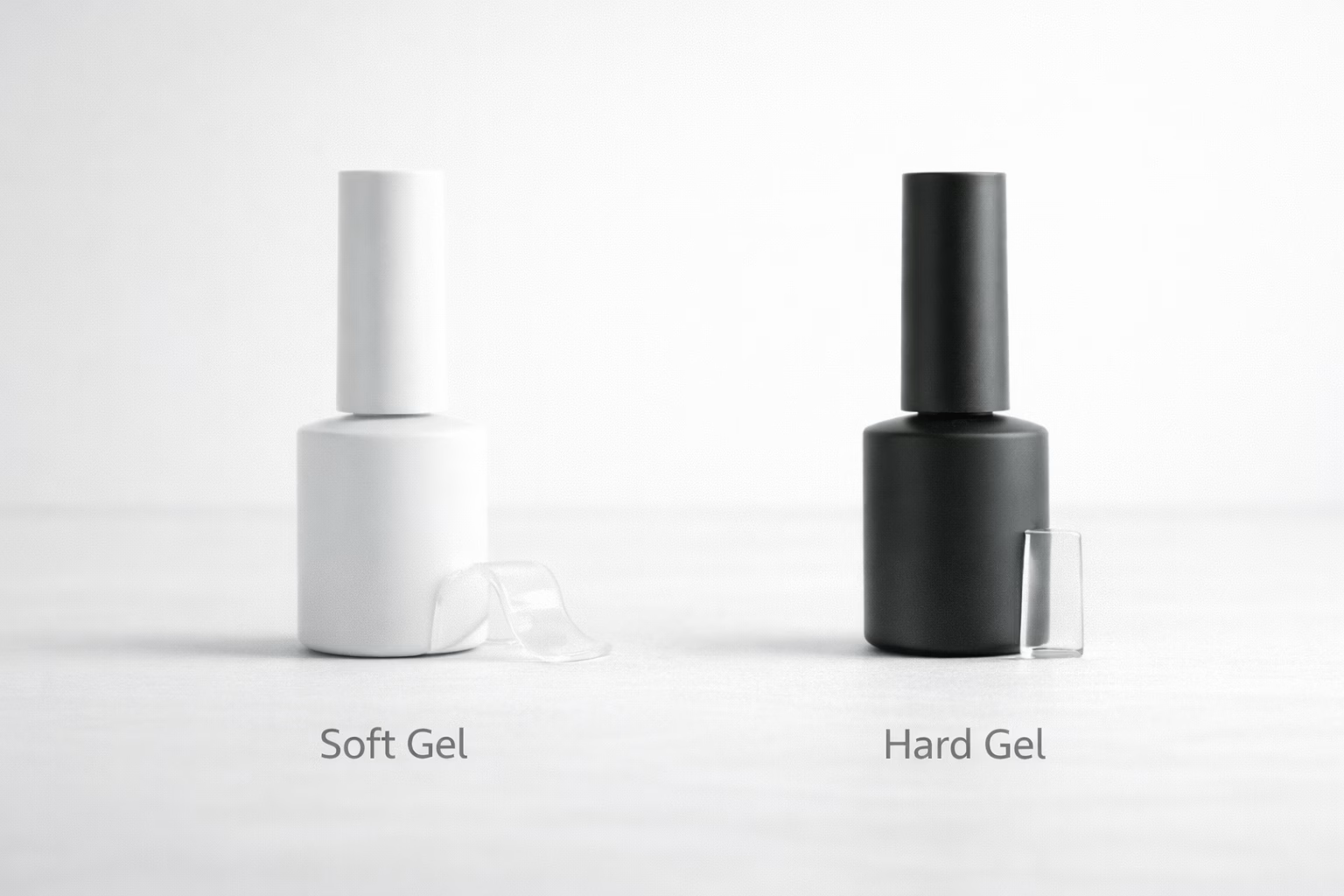
Soft gel refers to gel systems that retain flexibility after curing and can be removed by soaking in appropriate solvents.
Key characteristics include:
- Lower crosslink density
- Higher elasticity
- Solvent-permeable polymer network
- Compatibility with soak-off removal
Soft gels are designed to work with the natural nail, flexing under stress rather than resisting it.
What Hard Gel Actually Means
Hard gel refers to gel systems that cure into a rigid, solvent-resistant structure und cannot be soaked off.
Key characteristics include:
- High crosslink density
- High structural rigidity
- Solvent resistance
- File-off removal only
Hard gels are designed to create and maintain structure, even under heavy mechanical load.
The Chemistry Difference Buyers Need to Understand
The difference between soft and hard gel is not branding—it is polymer architecture.
Crosslink Density and Its Consequences
- Soft gels:
- Lower crosslink density
- More molecular movement
- Greater flexibility
- Hard gels:
- Higher crosslink density
- Limited molecular movement
- Higher rigidity
This difference explains nearly every behavioral contrast between the two systems.
Why Soak-Off Capability Is a Structural Choice
Soak-off ability is not a convenience feature—it is a design constraint.
To allow solvent penetration:
- Polymer networks must remain partially open
- Excessive rigidity must be avoided
This inherently limits how much load a soft gel can carry.
Structural Behavior Under Real-World Stress
Professional nails experience constant stress:
- Typing
- Impact
- Bending
- Temperature fluctuation
How gels respond to this stress defines their suitability.
Soft Gel Stress Response
Soft gel tends to:
- Absorb shock
- Flex with the nail
- Reduce cracking risk
However, excessive flexibility can lead to:
- Shape distortion
- Apex collapse
- Reduced longevity under heavy use
Hard Gel Stress Response
Hard gel tends to:
- Maintain shape under load
- Resist deformation
- Support length and architecture
However, rigidity increases:
- Impact fracture risk
- Stress concentration at adhesion points

Application Workflow Differences
Soft Gel Workflow
Soft gel systems are optimized for:
- Faster services
- Minimal filing
- Easy removal
- Lower skill barrier
They integrate smoothly into:
- High-volume salons
- Retail-compatible professional systems
- Training environments
Hard Gel Workflow
Hard gel systems require:
- Controlled application
- Structured building techniques
- Filing-based refinement
- Technical skill
They are best suited for:
- Advanced salons
- Nail extensions
- Structural corrections
Removal Method: Why It Matters More Than Buyers Expect
Removal is not just a technical issue—it is a commercial and experiential factor.
Soft Gel Removal
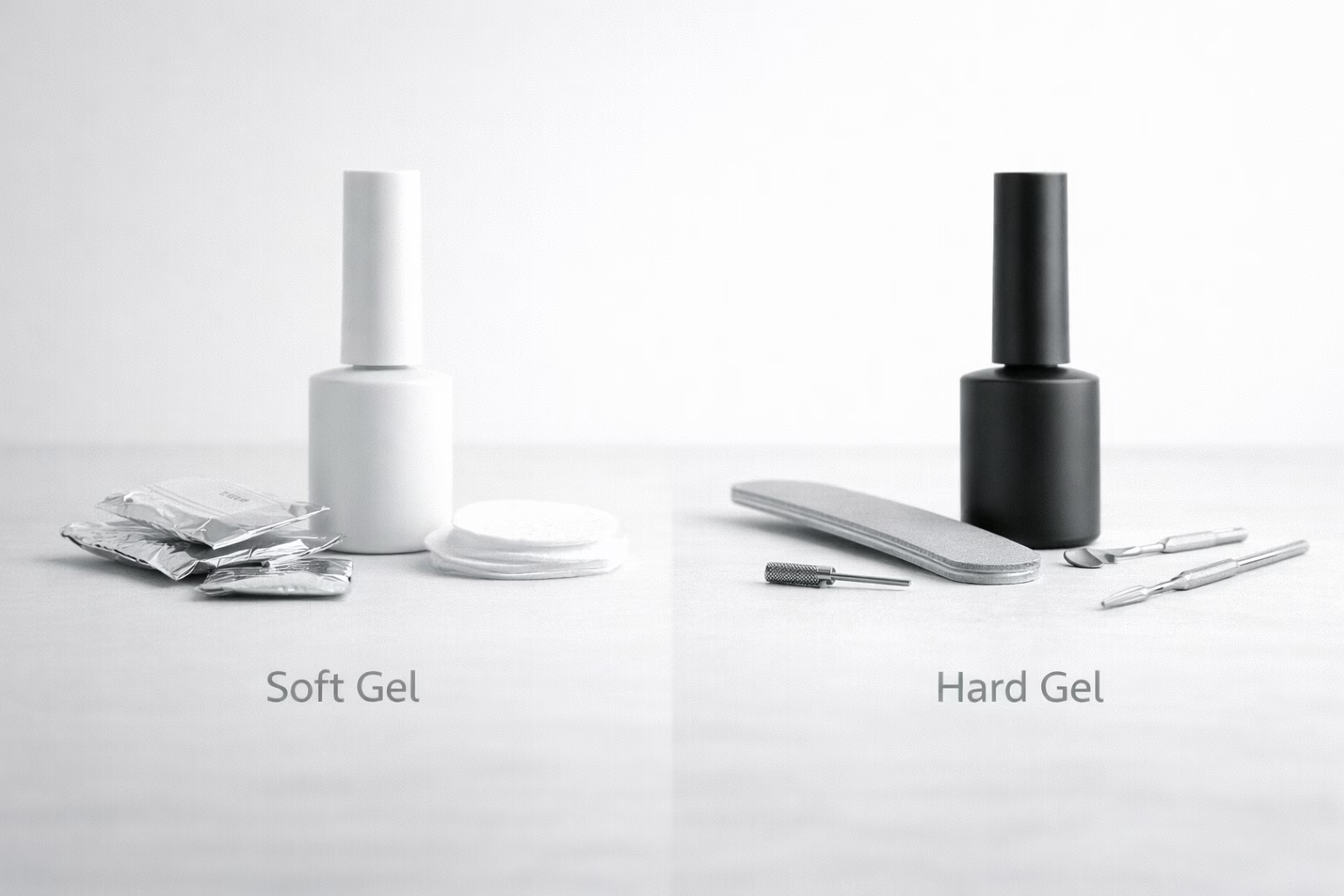
- Soak-off removal
- Shorter service time
- Lower nail damage risk when used correctly
This appeals strongly to:
- Retail customers
- Natural nail-focused clients
- Markets sensitive to nail health concerns
Hard Gel Removal
- File-off removal only
- Longer service time
- Higher technician skill requirement
This is acceptable in:
- Professional-only environments
- Structural service pricing models
Service Longevity and Maintenance Cycles
Soft Gel Longevity
Soft gels typically:
- Wear well for natural nail overlays
- Require more frequent maintenance under heavy stress
They excel when:
- Nails remain short
- Clients prioritize comfort and flexibility
Hard Gel Longevity
Hard gels:
- Maintain shape longer
- Support extended wear and length
They are preferred when:
- Structural integrity is critical
- Maintenance intervals are longer
Client Profile Differences
Clients Suited for Soft Gel
- Natural nail wearers
- First-time gel clients
- Clients concerned about removal damage
- Clients with flexible nail plates
Clients Suited for Hard Gel
- Clients seeking extensions
- Clients with flat or weak nail architecture
- Clients needing correction or reinforcement
- Experienced gel wearers
Market-Level Implications for Brands
From a brand perspective, soft vs hard gel affects:
- Training requirements
- Customer education cost
- SKU planning
- Regulatory positioning
Brands that misalign gel type with market expectation often experience:
- High return rates
- Negative reviews
- Technician resistance
OEM Perspective: What Manufacturers Observe
From an OEM viewpoint, the most common issue is brands asking one system to do both jobs.
At YICHUN Gel Factory, operating through the GELOEM platform, a consistent pattern appears:
Brands that clearly separate soft gel and hard gel systems:
- Scale more smoothly
- Encounter fewer disputes
- Maintain clearer product messaging
Brands that attempt hybrid positioning often struggle with inconsistent feedback.
Common Buyer Mistakes
- Assuming soak-off equals weakness
- Assuming non-soak-off equals superiority
- Ignoring removal time in service pricing
- Using hard gel for clients who need flexibility
- Using soft gel for structural correction
Each mistake creates downstream cost.
Choosing the Right System: A Practical Framework
Buyers should ask:
- What stress profile will the nails experience?
- How skilled are the users?
- What is the expected removal method?
- Is speed or structure the priority?
The answers point clearly toward soft gel or hard gel.
Can Brands Offer Both? Yes—But With Clarity
Offering both systems is viable only when:
- SKUs are clearly separated
- Education is channel-specific
- Positioning avoids overlap
Confusion between soft and hard gel within a brand erodes trust.
Regulatory and Safety Considerations
Hard gels often:
- Require stricter professional labeling
- Face higher scrutiny in certain markets
Soft gels often:
- Align better with retail regulations
- Require clear soak-off instructions
Buyers must align formulation, labeling, and market expectations.
Final Buyer Takeaways
Soft gel and hard gel are not competing products.
Sie sind solutions to different problems.
Soft gel prioritizes:
- Flexibilität
- Comfort
- Accessibility
Hard gel prioritizes:
- Structure
- Shape
- Durability
The right choice depends on use case, not preference.
Closing Perspective
In professional nail systems, performance is defined not by hardness or softness—but by appropriateness.
Brands that choose the right gel for the right context build loyalty.
Brands that chase versatility at the expense of clarity create friction.
Understanding the difference between soft gel and hard gel is not technical trivia.
Es ist ein strategic buying decision.