

Before the alarm sounded, light had already seen
From the summit of Gun Hill, light doesn’t simply shine—it watches.
Locals say: “The light from Gun Hill doesn’t touch people—it touches memory.”
Once a military signal station, it is now a quiet outpost surrounded by colors.
A sightline once used for defense
In the early 19th century, Gun Hill served as a lookout and signal post—especially during colonial unrest and slave uprisings.
Soldiers flashed mirrors to relay warnings across Barbados’s coasts.
The tower still stands, but only jacaranda trees remain as silent sentinels.
History never left—it merely changed its color.
Each color once carried a message
At Gun Hill, color once signaled orders—or silence.
When morning light tilts across the stone tower, it blends memory and hue:
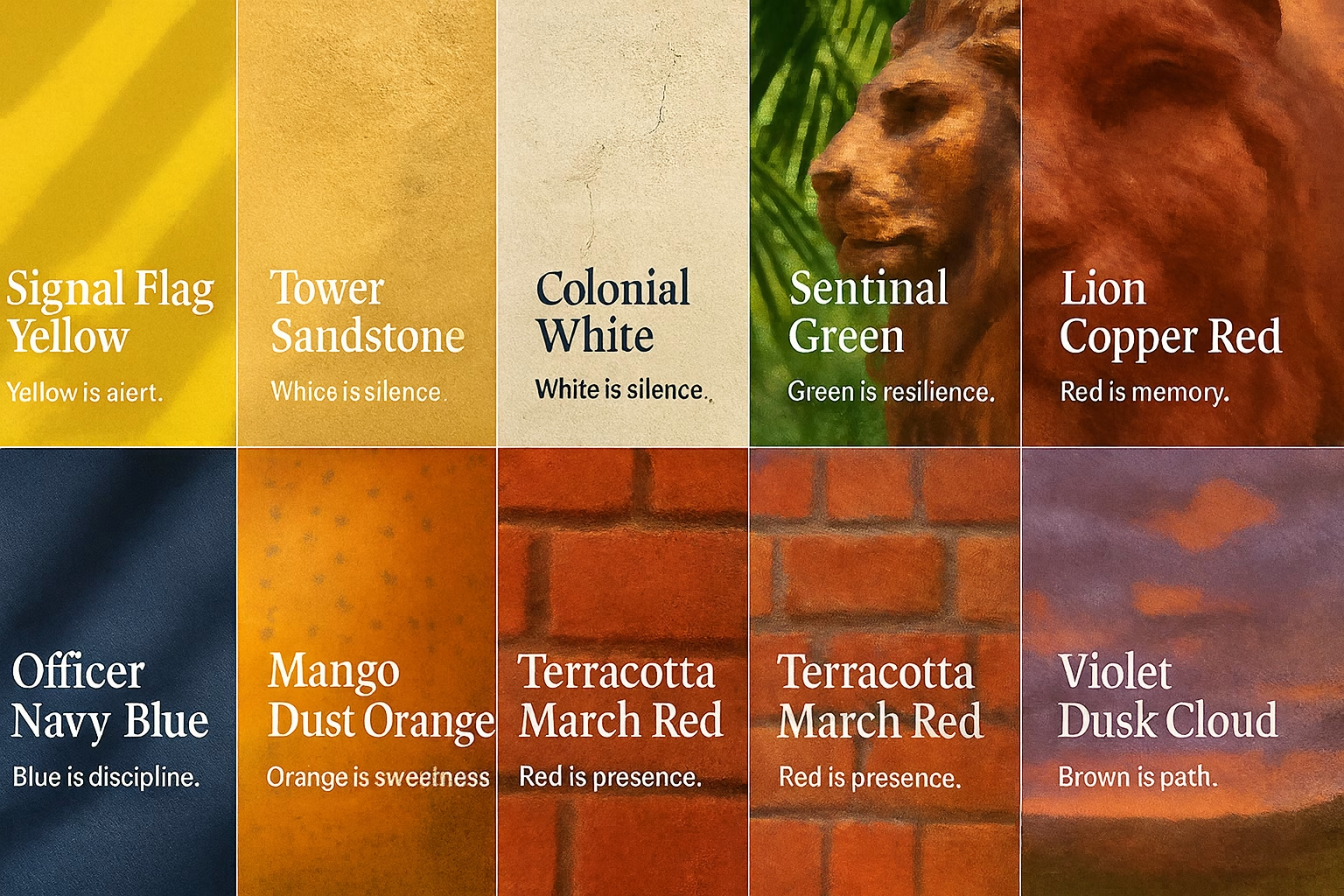
- Tower Sandstone Gold – the soft golden bricks at the summit
- Alarm Bell Red – the oxidized tone of the old signal bell
- Atlantic Signal Blue – distant hues at the ocean’s edge
- Colonial Limestone White – the bleached face of weathered stone
- Palm Guard Green – trees that circle the tower like a curtain
- Navy Officer Indigo – echoes of old military uniforms
- Mango Flower Orange – the scent and color of fruit in sun
- Lavender Dawn – early morning haze in violet light
- Terracotta March – foot-worn steps below the tower
- Signal Flag Yellow – the bright flags that once waved atop
- Crow Wing Black – flocks once seen circling above
- Traveler’s Earth Brown – the shade of paths carved by time
Each hue is both code and echo.
The tower hears more than it says
Gun Hill once transmitted news of invasion, illness, rebellion, and calm—all by flag and flash.
Today we can no longer read its signals, but the moss along the walls and ivy at its base whisper what bricks cannot.
Color became its language. Stone, its transcript.
The lion statue remembers
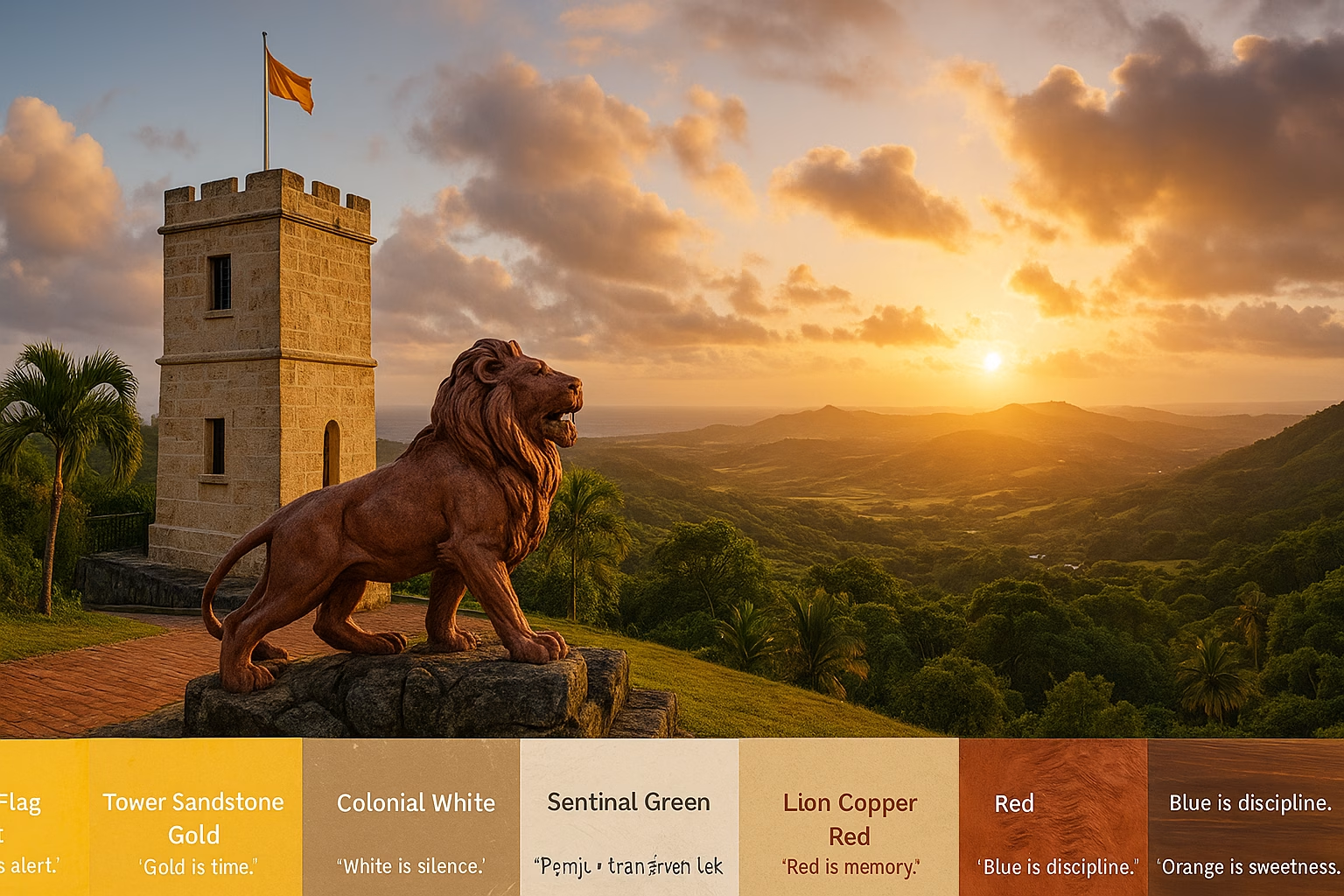
Beside the tower sits a stone lion—not myth, but monument.
Locals call it “the last watchman on the hill.”
It gazes southward, forever on guard. The lichen on its back is called “memory spots”—patches of time, not decay.
The sky here remembers slower
The clouds above Gun Hill drift more slowly than those by the sea.
Every hour casts a different tone across the walls—
Mornings are amber, afternoons metallic, twilight a wash of bronze and plum.
The wind doesn’t speak, but it repeats
Some evenings, you might hear footsteps not your own.
Drills, watches, escapes, and silence—
The wind brushes against railings like forgotten code still waiting to be understood.
Color as ancient signal
Every crack, every stain is nature writing a new message.
There are no loud sounds, just these:
Red is warning.
White is pause.
Blue is distance.
And green… green is what survives.
The walls remember every watch
Between the bricks grow moss; on the handles, handprints from long ago remain.
Some stones are marked with numbers, others with names or years.
It is not a ruin—it is an archive in stone.
A new palette after empire
Once marked by colonial tones, the station has faded into new color—
One drawn from light, wind, sky, and trees.
It is a palette not of orders, but of homegrown presence.
Conclusion: The hill is both lookout and echo
Gun Hill proves that history isn’t always told in invasions and flags.
Sometimes, it is softened by trees, worn into stone, and expressed in color.
Still watching from its perch, the tower reminds us:
Color is the gentlest signal of memory.
And the high ground will always light up again.
📍 Gun Hill Signal Station, Barbados